A plan that is outdated before it runs
Data flow is slow and every change requires redoing the plan manually. By the time the new version is out, reality has changed again.
 Talk to an expert
Solutions · Planning Digital Twin
A machine stops, demand shifts, a ship is late, and the week's plan stops being valid. The Planning Digital Twin recalculates the best plan considering your plant's physical constraints and your business goals, compares scenarios in minutes, and shows the trade-off of each decision before it is made.
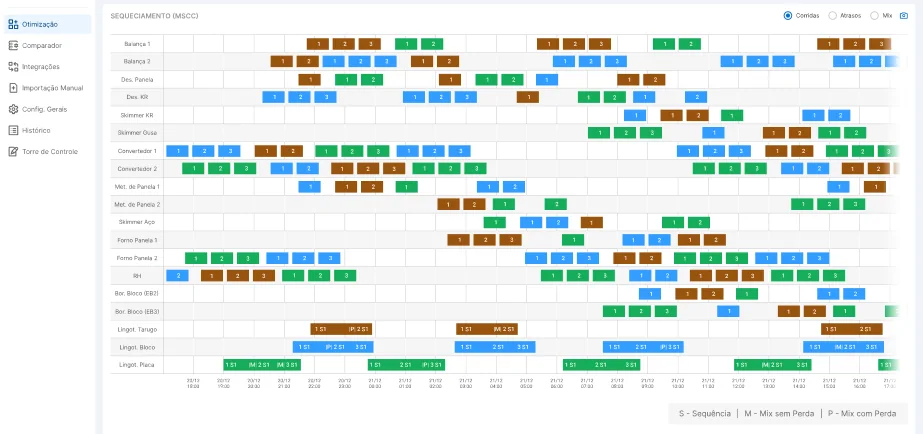
Spreadsheets and off-the-shelf tools were built for a stable world. In real industry, the plan must reconcile physical constraints, commercial targets, and unexpected events at the same time, and redoing it by hand takes hours the operation does not have.
Data flow is slow and every change requires redoing the plan manually. By the time the new version is out, reality has changed again.
Standard tools optimize a fixed objective and ignore the rules of your strategy: customer priority, margin per product, quality constraints.
One or two scenarios are compared, with no risk metric. The choice between producing more or delaying less is made in the dark.
S&OP sets a volume, PCP finds out it does not fit, and the operation absorbs the difference. Each area plans with its own assumptions.
The Planning Digital Twin is the digital replica of your operation, with your business rules built in. It simulates thousands of scenarios, measures the risk of each one, and recalculates the plan on its own when reality changes, from real time to the business plan.
Discuss your applicationThe Planning Digital Twin is modular and tailor-made. Each module covers a decision horizon, and all of them exchange information in both directions: what S&OP decides reaches PCP, and what happens on the shop floor updates S&OP. Risk analysis runs across every horizon.
Integrated modules with full-duplex communication
What is the best action right now, given what is happening in the plant?
Will today's plan be met? Where to intervene?
What is the best production sequence for the week?
How to execute the tactical plan in the face of changes in demand and capacity?
How much to sell, produce, and stock to balance market and capacity?
What volume and mix are feasible for the year, given scheduled stoppages?
Which investments and long-term scenarios support the strategy?
The cycle runs continuously and feeds back on every decision.
Each feature answers a decision that planning makes every day.
In what order should we produce to lose less?
Sequences orders and heats considering physical and business constraints: changeover times, product compatibility, each machine's capacity, and delivery dates. Gantt view, ready to publish.
Produce more or delay less?
Compare the base scenario and scenarios optimized for different objectives side by side. See, in tons and in orders, how much each choice gains and how much it costs.
What keeps demand from being met?
Shows, from demand to scheduled volume, where volume is lost and why, for each product, route, and resource.
What are the chances of meeting this plan?
Production probability curves calculated from each SKU's historical behavior. Define the acceptable level of risk before making commitments.
What if something changes right now?
When a machine stops or demand changes, the twin recalculates the plan in an integrated way across all affected horizons.
When can we stop without losing production?
Optimizes the allocation of scheduled stoppages against commercial commitments, from the current month to the annual budget.
What happens if…?
Test demand, capacity, and logistics assumptions at scale and anticipate problems before they reach the operation.
Is the plan's data reliable?
Real-time status of each integration (APS, MES, ERP, SAP, WMS, TMS), so that no plan is made on outdated data.
Standard tools deliver a plan. The twin delivers the best plan for your operation and shows what you are trading off by choosing it.
| Dimension | Off-the-shelf tools | Planning Digital Twin |
|---|---|---|
| Physical representation | Basic simulation, with preconfigured data | Advanced simulation of thousands of complex scenarios |
| Strategic alignment | Standard optimization, without your strategy's requirements | Custom optimization, aligned with business goals |
| Plan updates | Slow data flow and a plan that is hard to redo | Adaptive replanning, integrated across the whole chain |
| Accuracy | Lower accuracy in predictive actions | High accuracy, with data and modeling specific to the operation |
| Risk | Few scenarios, no risk metrics | Multiple scenarios, with risk measurement and reduction |
| Visibility | No real-time view | Autonomous real-time analyses, with alerts and insights |
| Trade-offs | Little customization | Complete view of trade-offs, with a high level of customization |
The numbers below come from projects in production, several of them documented in technical papers presented at AISTech and ABM Week.

Challenge
Sequence more than 1,500 orders across converters, ladle metallurgy, and continuous casting
Result
+1 day of production per month with no infrastructure investment; 4.5 million t/year of liquid steel optimized

Challenge
Recover the plan after a deviation in the shift
Result
Estimated shift loss reduced from 108 t to 32 t (76 t avoided) and 24 fewer minutes of downtime
Challenge
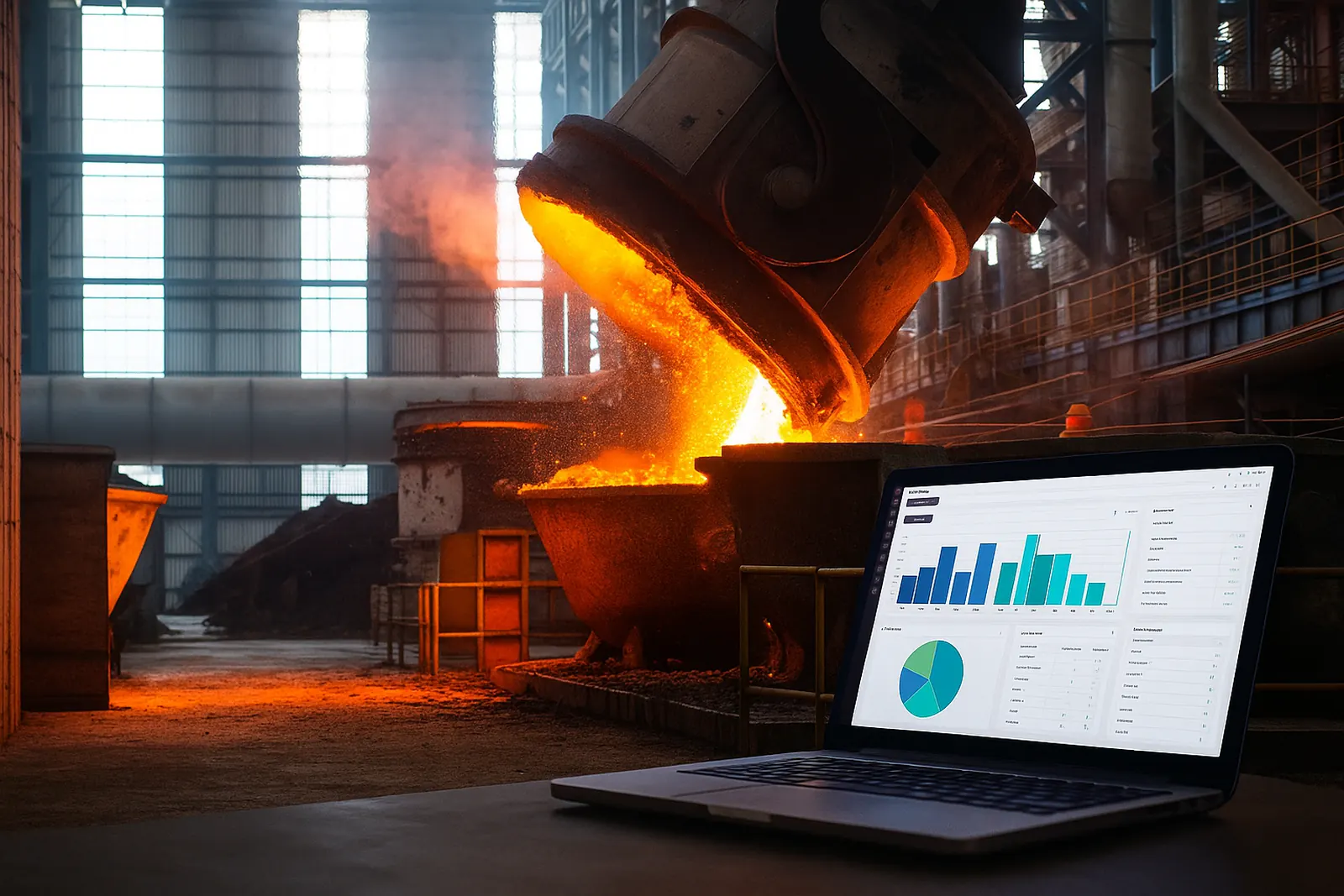
Avoid pig iron dumping due to excessive waiting
Result
Dumped cars reduced from 61 to 29 in a 30-day scenario; 48 h visibility of every movement
Challenge
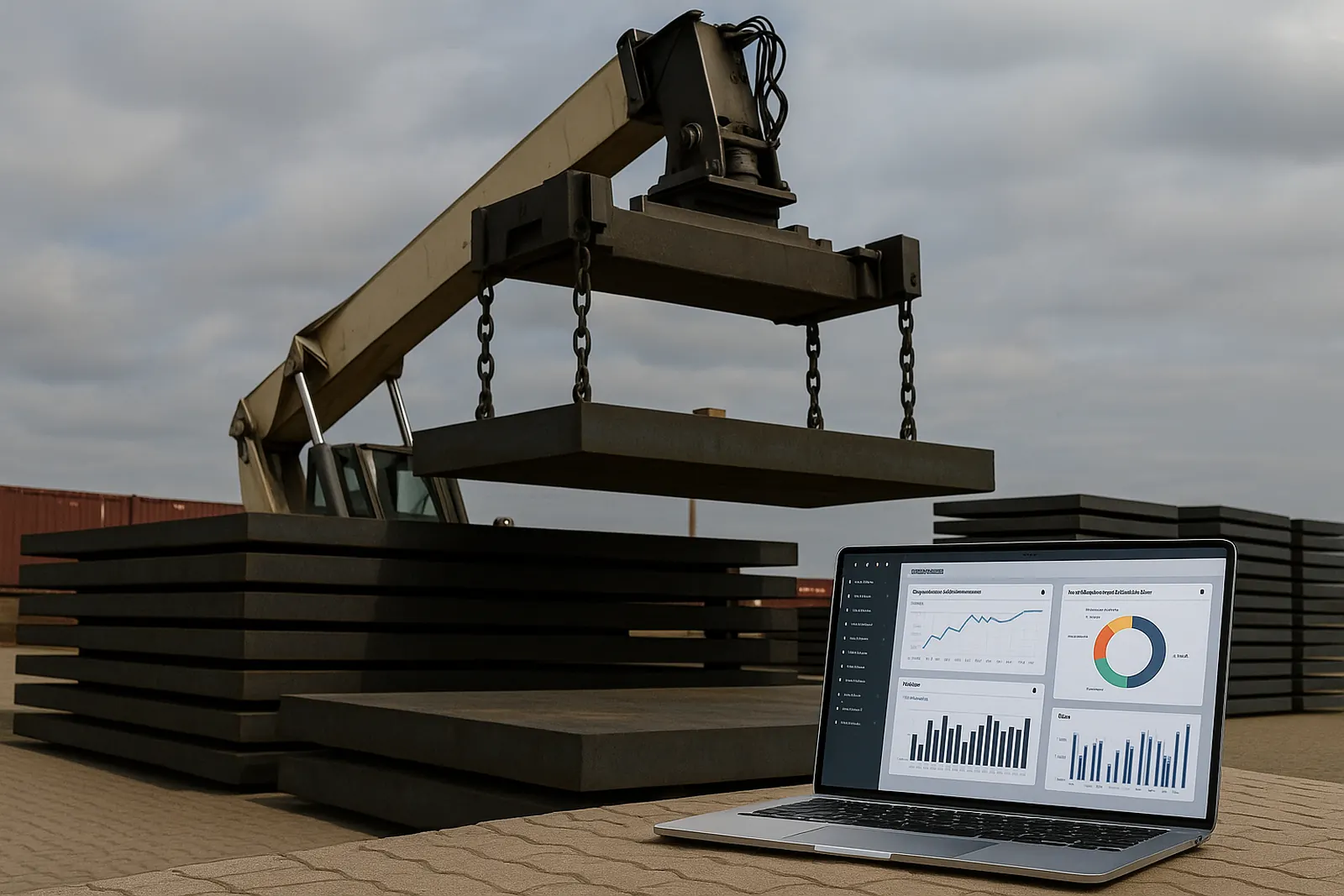
Form loads with the fewest movements
Result
Maximum movements per load from 15 to 6, about 60% fewer movements overall
Challenge
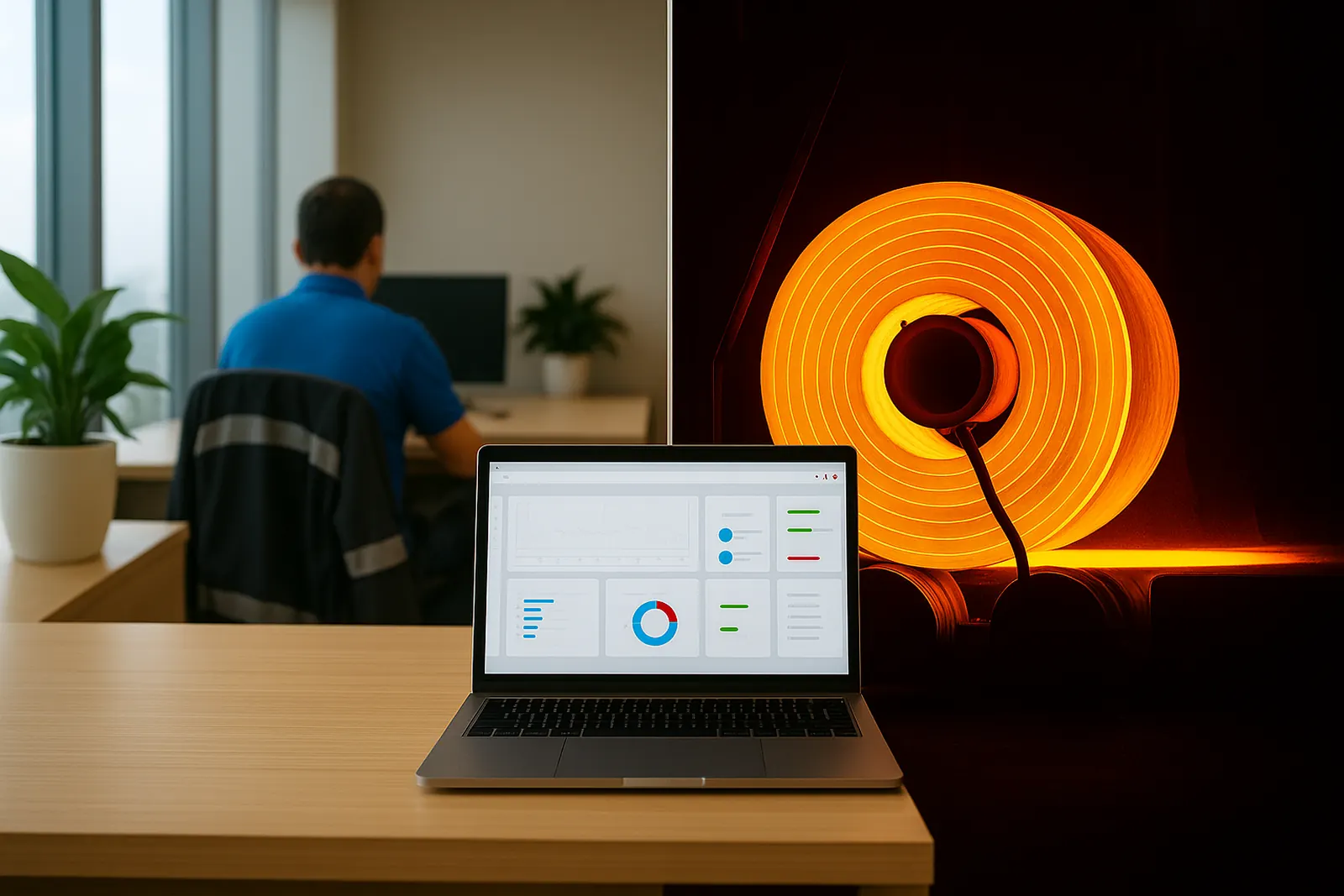
Sequence campaigns respecting roll and gauge changes
Result
13.5% fewer stand changes and 21.3% production time saved, on average
Challenge
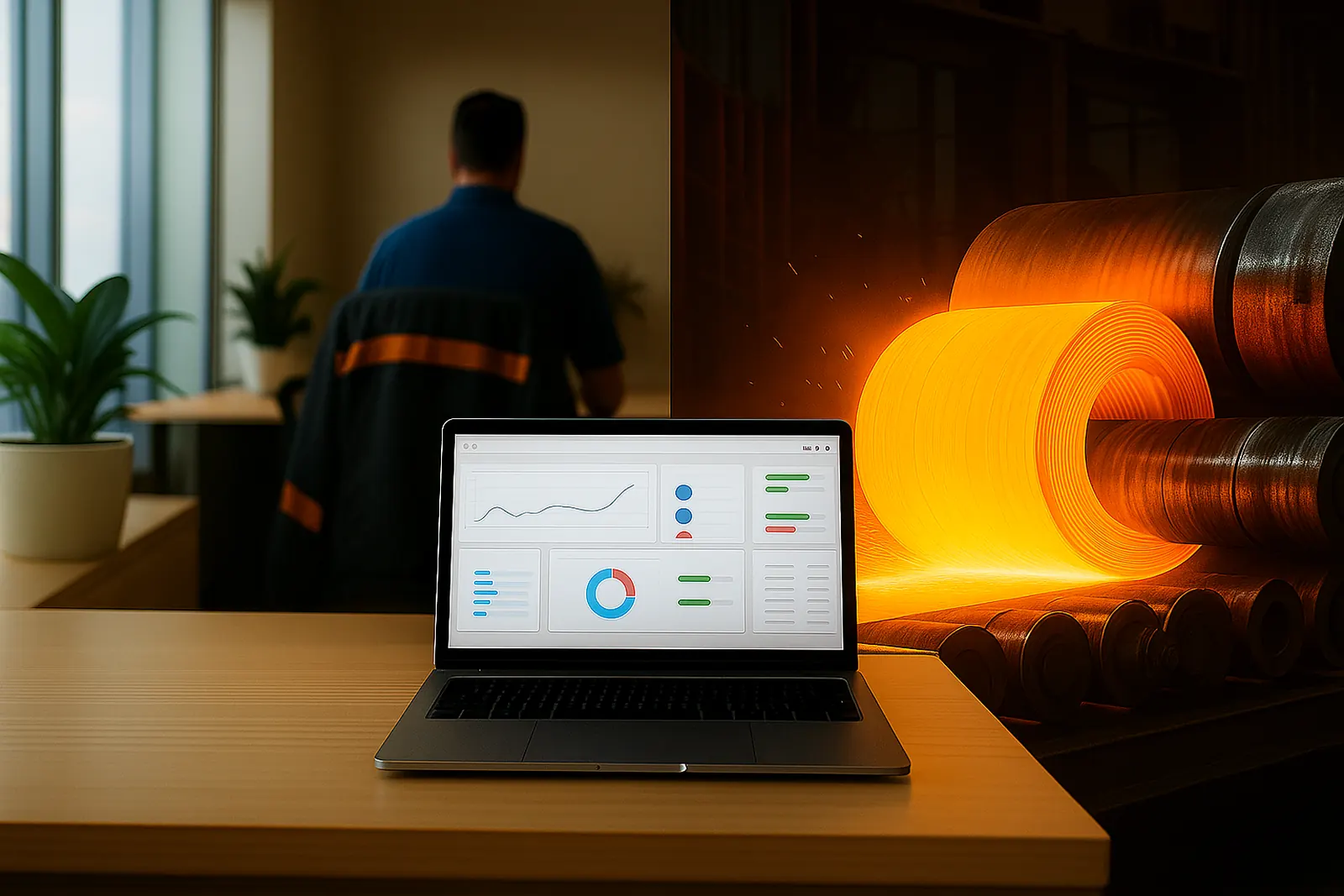
Get the twin's plan followed in practice
Result
80.5% adherence of the operation to the Digital Twin's plan
Challenge
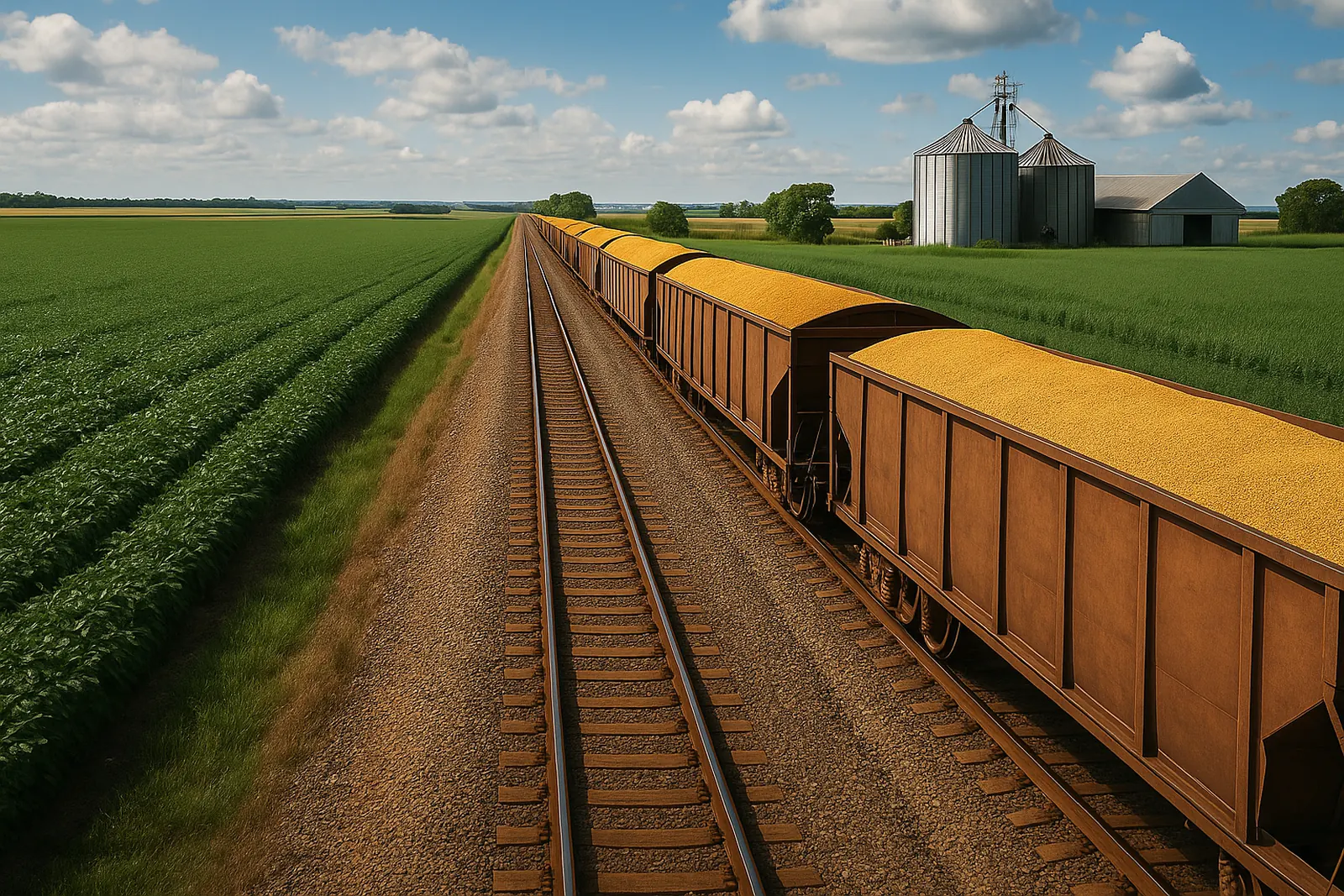
Integrate rail, terminal, and port planning
Result
Multimodal planning integrated in a single platform
Deployment starts from Gemminus, Enacom's proprietary Digital Twin platform, and is customized to the constraints and strategy of your operation. Because it is modular, we start with the horizon of greatest impact and expand to the others as the first results appear.
We map processes, constraints, systems, and the horizon where planning loses the most value.
Integration with your systems, modeling of the operation, and calibration of the optimization algorithms for your objectives.
Our team accompanies planners in daily use until the solution becomes part of the routine.
New modules and horizons, from PCP to S&OP and the budget.
For operations where the plan involves many constraints at once and every hour of production or every late ton weighs on the result. The solution already operates in integrated steel mills and minimills and in rail and port logistics chains.
SteelMiningLogistics and Supply ChainEnergy & UtilitiesProcess industry
Scenarios with clear trade-offs to decide volume, mix, and investments.
Sequences optimized in minutes and fast replanning when the unexpected happens.
A plan that fits the real capacity of the operation.
Delivery and volume commitments with known risk.
See the decision pages linked to this content.
Increase productivityReduce costsImprove operationsUnderstand cost and marginRisk and capacity
It is a digital replica of the operation that combines physical assets, constraints, and business strategy to generate optimized plans. It simulates scenarios, measures risk, and automatically recalculates the plan when the operation changes.
A traditional APS applies standard optimization logic over preconfigured data; the Planning Digital Twin models your operation's specific constraints and optimizes for your business objectives. It also integrates several horizons, from real time to the multi-year plan, and measures the risk of each scenario.
From real time to multi-year: operations optimization, Control Tower, PCP (3 to 7 days), S&OE and S&OP (1 week to 10 months), annual budget, and business plan. The modules can be contracted separately and exchange information with each other.
It uses custom optimization algorithms that consider physical constraints, such as equipment capacity and changeover times, and business constraints, such as deadlines and customer priorities. In a steel shop, the solution sequences more than 1,500 orders in about an hour.
A trade-off is the exchange between conflicting objectives, such as producing more or delaying fewer orders. The scenario comparator shows side by side how much each alternative gains and loses, in tons and in orders, so the decision is explicit.
In steel, +1 day of production per month with no infrastructure investment and about 60% fewer yard movements. In section rolling, 21.3% production time saved on average.
With ERP, MES, APS, TMS, WMS, and SAP, among others. The status of each integration is monitored in real time.
Not necessarily. The twin integrates with existing systems and adds the layer of modeling, optimization, and scenario analysis that they lack.
Setup + subscription. The subscription covers licensing, support, training, version updates, and customization services.
With the Digital Twin Tutor, the planner asks the twin in natural language, using generative AI: “what happens to delays if we prioritize customer X?”. The Tutor answers based on the twin's own data and models, with no need to browse dashboards.
In a conversation with our specialists, we map your constraints and the horizon where the twin delivers the fastest return.
You leave with a clear path to the first module.