
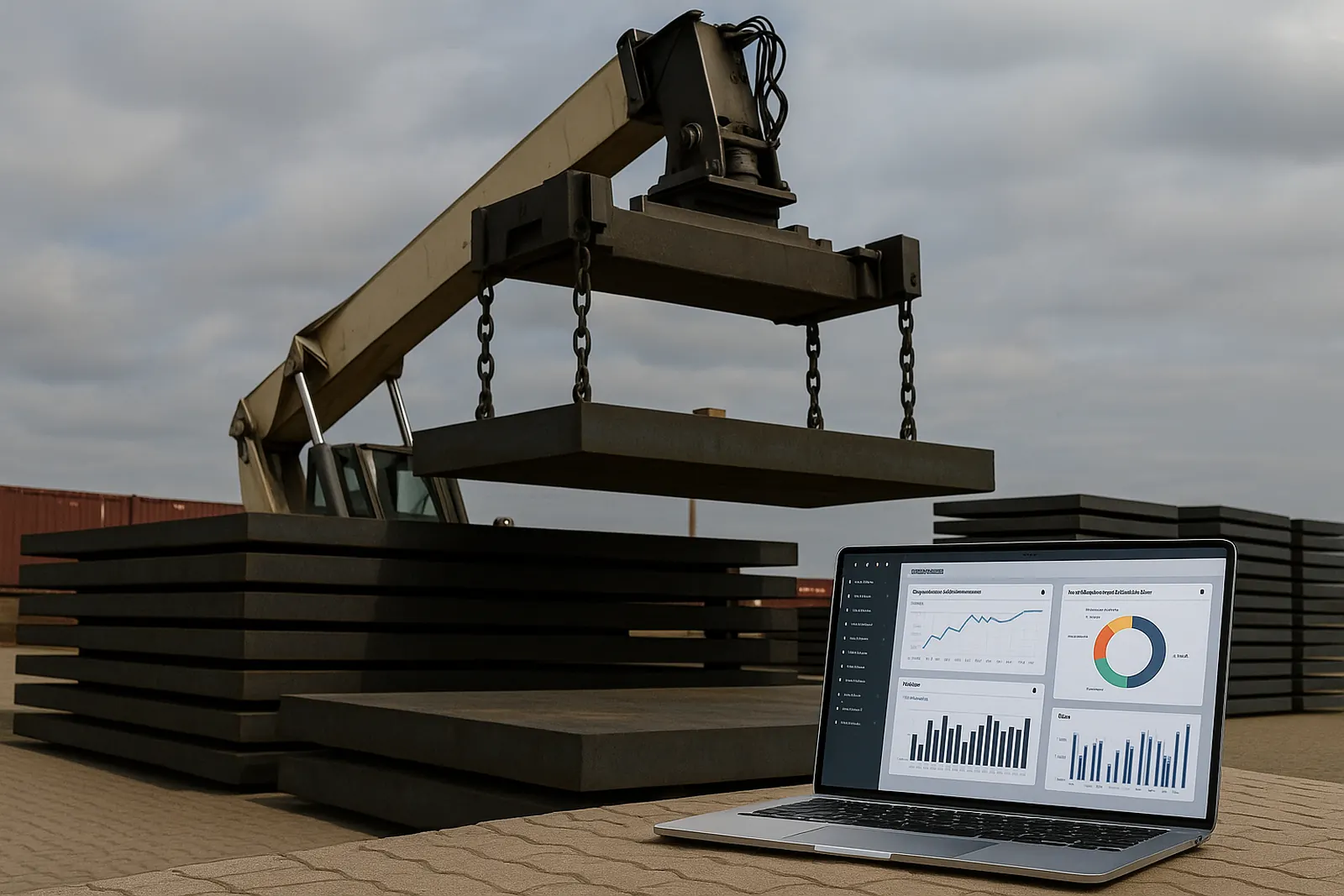
From 15 down to 6 moves, at most, to build a load in the yard
A steel mill began planning yard movements with Enacom’s Planning Digital Twin, from the exit of continuous casting to dispatch.
Talk to an Enacom expertKey results
- −60%
- in the maximum number of moves to build a load, from 15 to 6
- 1 move
- is enough to build half of the loads; before, up to 5 were needed
- 87%
- of loads built with up to 2 moves; before, 11%
- Zero
- stacking operations outside the safety rules
The challenge
The yard connects production to the customer. Material leaves continuous casting, goes through an intermediate yard with a controlled-cooling area, moves on to rolling, and arrives at the shipping yard, from where it is dispatched by road or rail. Overhead cranes, container stackers, transfer cars, and trains compete for the same space and the same time.
When stock is poorly positioned, every load is expensive:
- Excess moves. To reach the right piece, others on top of it have to be removed.
- Unpredictable shipping. Loads take a long time to build, and trucks and railcars wait.
- Safety risk. Incorrect stacking led to violations of the safety rules.
The solution
With Enacom’s Planning Digital Twin, every yard move is now planned, from real time up to three days ahead, to serve the rolling mill and external customers:
Plans loads for the rolling mill
up to three days ahead, matching rolling demand against the stock in each yard to maximize shipments.
Indicates the ideal move in real time
for overhead cranes, stackers, transfer cars, and rail, seeking the lowest total number of moves.
Continuously reorganizes stock
distributing material among yards according to cutting, finishing, and cooling needs, so that upcoming loads need fewer moves.
The yard team executes the plan, and the stacking rules enter as a constraint, not as a check afterward.
Operating context
Results
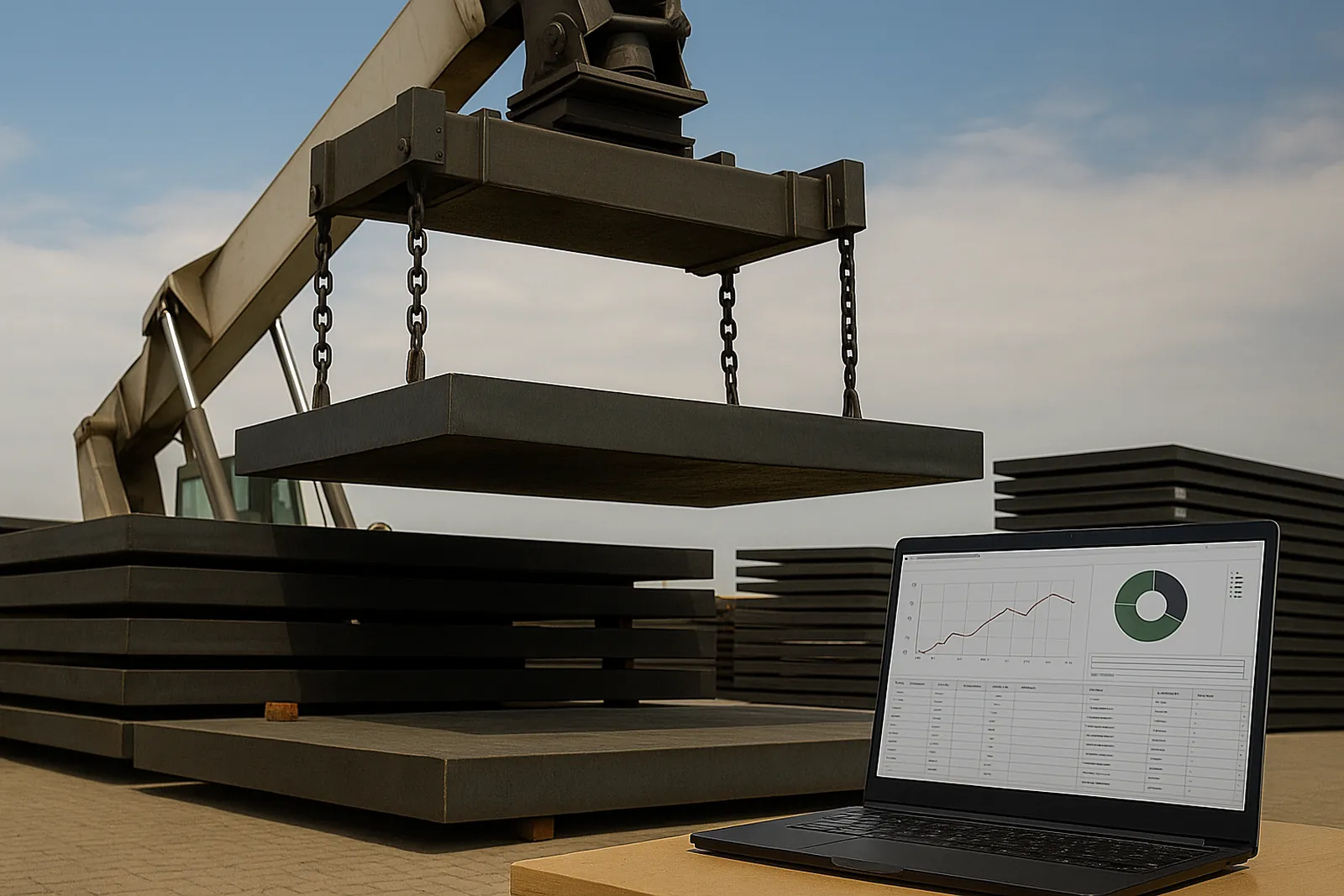
Load building moved to a new level. With manual planning, half of the loads needed up to 5 removal moves, and only 11% left with up to 2. With optimized planning, half of the loads are now built with 1 move, and 87% with up to 2. Loads that needed more than 4 moves fell from 58% to 2%, and the worst case went from 15 to 6 moves.
Stacking outside the safety rules was eliminated.
With fewer moves per load, the mill maximized its shipping capacity, gained predictability, and reduced the cost of shipping wait time.
- Loads built with up to 2 moves
- Loads that needed more than 4 moves
Source: Enacom project · manual planning vs. planning with the twin · cumulative % of loads
What changes for management
- More shipping with the same equipment. Fewer moves per load free up cranes and stackers for what generates dispatch.
- Predictable shipping. With loads built in few moves, shipping capacity becomes predictable, and trucks and railcars wait less.
- Safety as a rule of the plan. Stacking rules enter the planning and do not depend on checking afterward.
- A yard connected to production, from the exit of continuous casting to dispatch, in a solution that coexists with the ERP, MES, WMS, and TMS already in use.
This case is for you if
- Your yard serves rolling and shipping at the same time, with several handling machines.
- Building a load requires removing pieces stacked on top.
- Shipping by truck or train suffers from waiting and low predictability.
We start from your data: we customize the twin, validate the result in scenarios and a pilot, and only then scale. The results in this case reflect the conditions of that mill.
Want to know how many moves your yard could stop making?
Notes on the results
- Moves per load: removal moves needed to build a load, under manual planning and under planning with the twin; 15 and 6 are the maximums observed.
- Half of the loads: number of moves up to which 50% of loads are built.
- Distribution: share of loads built with up to 2 moves and with more than 4 moves, under manual and optimized planning.
- Safety: violations of safety rules caused by incorrect stacking.
Client name withheld.