
The proof is that this tool, which offers an opportunity to understand industrial assets in depth and enables more assertive, optimized maintenance and management, can be adopted in just a few steps.
To learn more, keep reading and see how a Digital Twin model is created in three steps.
What Is a Digital Twin?
A Digital Twin can be described as a virtual model of a real product, process, or service that can monitor, analyze, and improve its performance.
The model is created using computer-aided engineering and is integrated with the Internet of Things, Machine Learning, and Big Data analytics.
In this way, the model becomes a dynamic virtual prototype of a physical object, which means it is updated every time its physical twin changes.
The Digital Twin can also learn by absorbing the data fed into it, from the machines and the environment in which it operates.
To be approved, a twin must meet three requirements:
Look identical to the original object down to the smallest detail.
Behave the same way as the original object during testing.
Analyze information about the original object, anticipating possible problems and suggesting solutions.
How to Build a Digital Twin?
To create an effective Digital Twin, it is essential to use enabling technologies such as Cloud Computing, Artificial Intelligence, Machine Learning, Internet of Things, Big Data, and others that can adapt to your specific needs.
These tools allow the model to simplify construction processes, speed up project completion timelines, and minimize waste of resources. In addition, some practices need to be adopted when building a twin, such as:
- Clearly define the purpose and scope. it is essential to establish precisely the main objective and the specific applications for which the digital twin will be used, as well as to identify how it will be managed and which functionalities it should include.
- Identify the key components. it is important to determine which information should be integrated into the digital twin model.
- Faithfully capture the physical object. the digital twin must accurately represent the real object being replicated, so it is advisable to use advanced technologies, such as photogrammetry, laser scanners, and sensors, to create the most realistic model possible.
- Analyze collaboratively. take advantage of cloud technology to share all of the digital twin's information and updates with the work team. This method makes it possible to coordinate operational decisions and project choices more effectively.
Three Phases in Building a Digital Twin
Creating a Digital Twin in practice requires more than scope mapping. It also requires a series of tools to create a complete 3D model with sensors capable of collecting real-time data and suggesting targeted interventions.
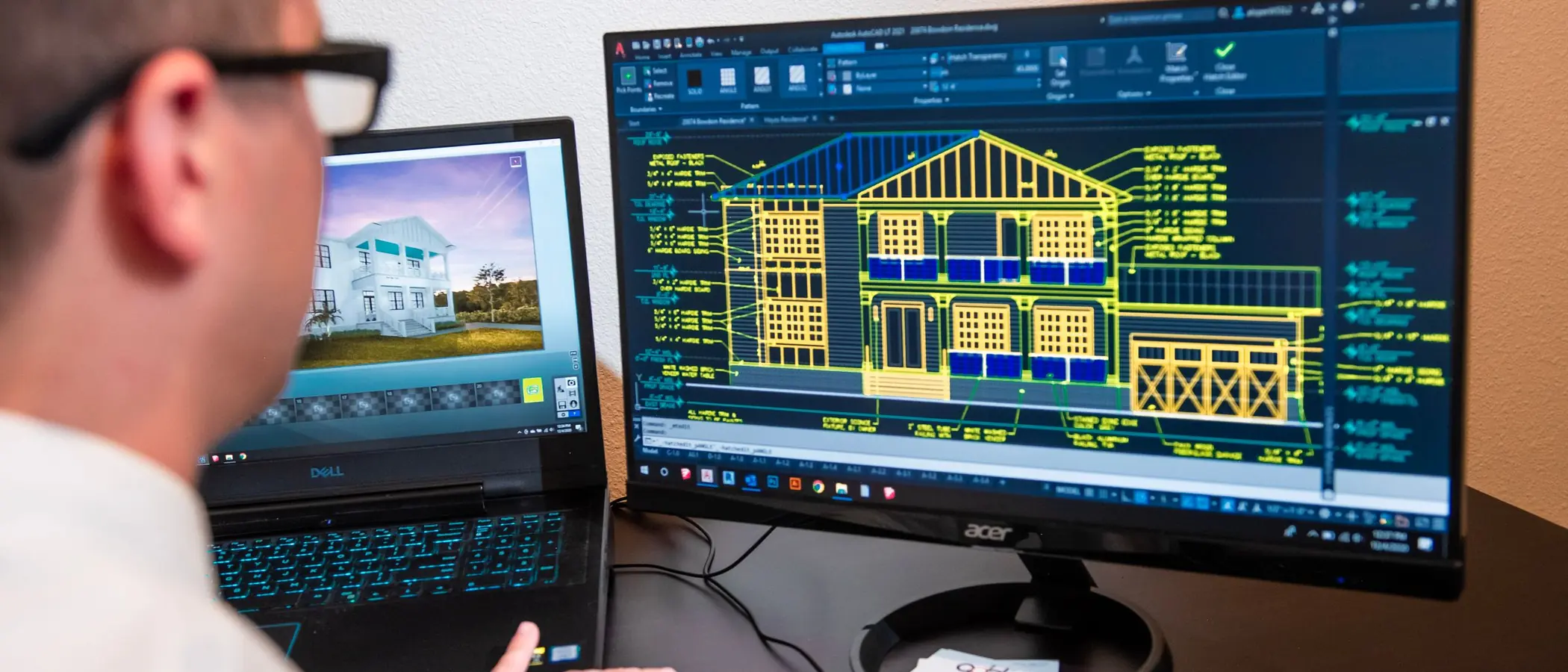
That is why it is important to rely on the BIM methodology and on tools such as laser scanners or drones to create the 3D model with all of the physical asset's architectural and structural information, as well as IoT sensors to link the information between the created object and its physical twin and collect real-time data, enabling better management during project execution.
The process as a whole still demands many diagnostics, reports, and targeted test activities to properly create a digital twin, but using robust tools to build the digital model makes it possible to simplify processes, speed up timelines, and minimize waste of resources.
Digital Twin: The Strategic Technology of Today
Digital Twin technology is already widely used in industry. But the situation is changing rapidly, with more and more companies implementing the Internet of Things in their operational processes. In this sense, digital twins will soon be seen in almost every sector as the strategic technology that will transform business models.
The software enables cost reductions from its creation through to the customer's final use. That is because it can be tested in a virtual simulation environment as many times as needed, making it faster and cheaper to correct possible errors and to make it work exactly as planned. In addition, its maintenance is economical for businesses because it requires fewer employees, which makes cost reduction the technology's main benefit.
Creating products with a Digital Twin also greatly reduces time to market, and the virtual prototype makes all improvements quickly and easily so that the physical asset's behavior is optimized in effectiveness and development time.
Another advantage of this technology of the future is predictive maintenance. The Digital Twin can solve problems before they happen by analyzing information collected from the physical asset, easily presenting assertive and efficient decision-making options, saving time and money.
In the future, industrial software will be built with disruptive and strategic technologies for better business performance. But at Enacom, we already have that solution for your company. Meet Gemminus, our Digital Twin platform, customizable for all industry sectors. Unlock your business's potential: get in touch and request a demo.
Learn more: explore the Gemminus platform.