
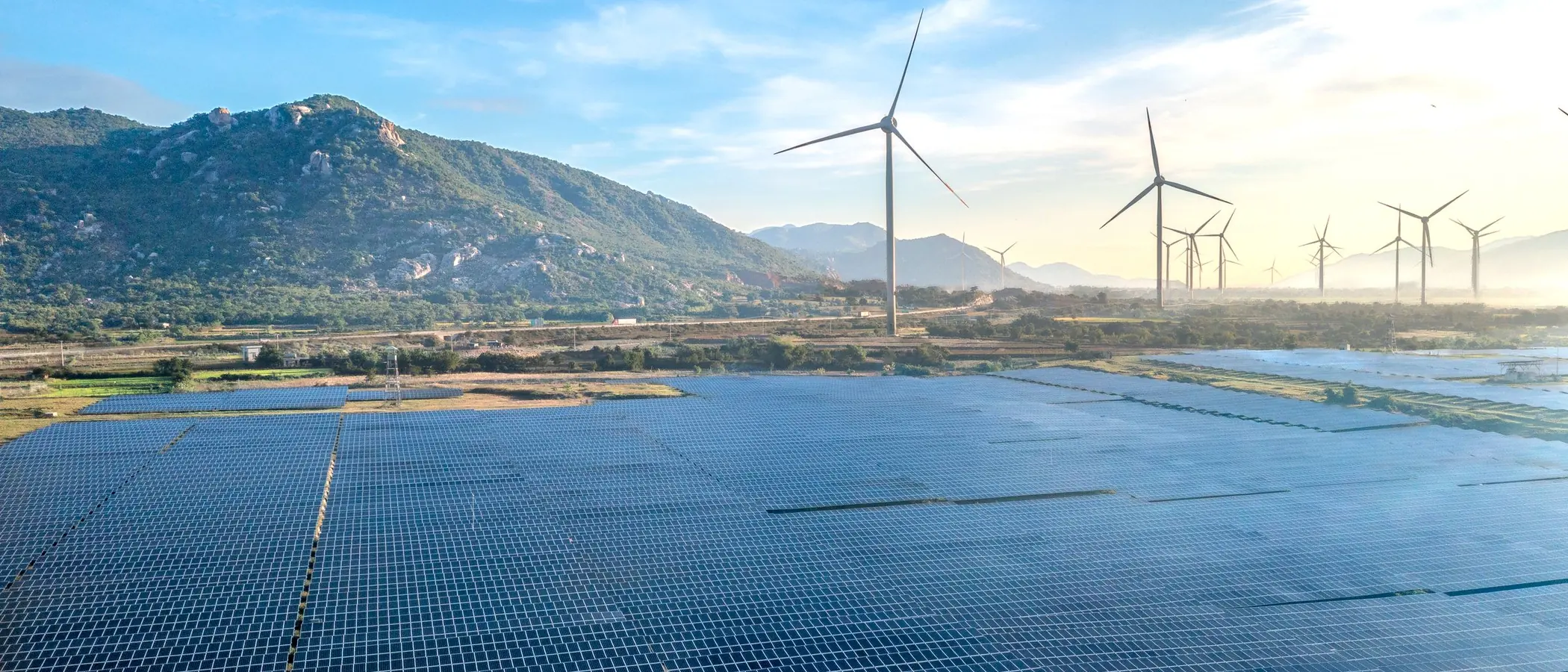
In this context, it is important to understand how adopting these energy sources can benefit not only the environment, but also companies.
By using clean energy sources such as solar, wind, hydropower and biomass, companies can significantly reduce their carbon footprint, contributing to climate change mitigation. Keep reading to learn more about Renewable Energy in Industry.
What is renewable energy?
Renewable energy is obtained from natural sources that constantly regenerate without being depleted. Examples of renewable energy include solar, wind, hydropower, geothermal, biomass and tidal energy.
These forms of energy are considered clean or green because they do not emit polluting gases that contribute to global warming and other forms of pollution.
In addition, renewable energy is safer and more cost-effective than non-renewable energy sources such as fossil fuels (coal, oil and natural gas), which are finite and subject to price fluctuations and scarcity.
Current Landscape: Energy and Sustainability
Renewable energy is essential to fighting climate change, one of the greatest threats to humanity and the environment. For this reason, it is advocated by the 7th Sustainable Development Goal (SDG) of the United Nations (UN), which aims to ensure access to clean and affordable energy for all by 2030.
According to a report by the International Renewable Energy Agency (IRENA), renewable energy accounted for 26% of the global energy mix in 2018, led by hydropower (16%), wind (6%) and solar (2%). The goal is for this share to reach 45% by 2030 and 86% by 2050.
Challenges and Barriers to More Sustainable Production
Despite the benefits of renewable energy, it also presents some challenges and limitations that must be considered. Among them, we can mention:
- The high upfront cost of installing the equipment and infrastructure needed for renewable energy generation
- The dependence on favorable weather conditions for energy production, such as the intensity of sun, wind and rain
- The visual and noise impact caused by some types of renewable energy, such as wind turbines and solar panels
- The technical limitations on storing and transporting energy generated from renewable sources
- The environmental impact caused by building large hydropower projects or by exploiting geothermal resources.
Advantages and disadvantages of renewable sources
Adopting renewable energy can bring economic benefits to industries because, although the initial investment is one of the main obstacles to implementing these technologies, energy costs are drastically reduced in the long term.
Using solar panels or wind turbines, for example, allows companies to generate their own energy autonomously and reduce their dependence on external suppliers.
Another important aspect is the diversification of the energy mix: by adopting renewable energy, industries reduce their dependence on non-renewable energy sources such as oil and coal. This gives companies greater energy security, avoiding possible price swings and ensuring a stable, reliable supply.
Beyond the economic and environmental benefits, using renewable energy can also strengthen companies’ image with their consumers, who are increasingly concerned about environmental issues and seek to support sustainable companies.
Thus, by adopting clean energy sources, industries demonstrate their commitment to social and environmental responsibility, which can increase customer loyalty and attract new consumers.
In contrast to renewable energy as a whole, in Brazil hydropower is the most widely used source, accounting for about 65% of the country’s electricity generation. However, this type of energy is also the one that causes the most negative environmental impacts, such as the flooding of natural areas, the displacement of riverside populations, changes in river flow and methane emissions from reservoirs.
For this reason, in addition to investing in renewable energy, it is important to diversify sources by investing in other alternatives, such as wind and solar, which have a lower environmental impact and greater potential for distributed generation.
Positive Consequences for Operations and the Environment
Using renewable energy in industry brings benefits to both the environment and companies.
By reducing carbon emissions, lowering energy costs, strengthening energy security and improving their image with consumers, industries show that it is possible to reconcile economic growth with sustainability.
Therefore, investing in renewable energy is a smart and indispensable choice for the industrial sector today.
What are the main renewable energy sources?
Brazil is a country with great potential for harnessing renewable energy sources, mainly because of its tropical climate and vast territory.
According to the 2020 National Energy Balance (BEN), renewable sources accounted for 46% of Brazil’s energy mix in 2019, and the main ones were:
- Hydropower: generated by river water in hydroelectric plants
- Biomass energy: generated by the combustion or decomposition of organic waste, such as sugarcane bagasse, municipal waste and biogas
- Wind energy: generated by wind in wind turbines
- Solar energy: generated by solar radiation in photovoltaic panels or thermal collectors.
Software and Tools That Boost Energy Savings
Several software packages and tools can help managers and operators monitor, control and optimize energy consumption in industrial production processes, such as:
- Energy management systems (EMS). These are platforms that collect, store and analyze data on energy use across different industry areas, making it possible to identify improvement opportunities, set targets and track results.
- Industrial automation systems (IAS). These are sets of equipment and software that automate and integrate industrial operations, reducing energy waste and increasing efficiency and product quality.
- Heat recovery systems (HRS). These are devices that use the heat generated by industrial equipment and machines to heat water, air or other fluids, reducing the need for external sources of thermal energy.
- Smart lighting systems (SLS). These are solutions that adapt the intensity and color of light to environments and users’ needs, using sensors, timers and mobile devices, saving electricity and improving visual comfort.
These are just a few examples of software and tools that boost energy savings in industry. Many other options are available on the market and can be matched to each company’s characteristics and goals. What matters is investing in technologies that contribute to a more rational and sustainable use of energy resources.
Challenges of implementation in Brazil
The challenges of implementing renewable energy in Brazil are many and involve economic, technological, regulatory and environmental issues.
Although Brazil already has a predominantly renewable energy mix, based on hydropower generation, there is great potential to expand the share of other sources such as solar, wind and biomass.
These sources offer advantages such as reduced greenhouse gas emissions, diversification of the national energy mix and reduced dependence on fossil fuels.
However, they also face challenges such as high investment costs, dependence on favorable weather conditions, the need to develop new business models and the mitigation of environmental impacts.
In addition, industry is one of the sectors that consumes the most energy in Brazil, accounting for about 34% of the country’s final energy consumption in 2019, and most of that energy comes from non-renewable sources such as oil and natural gas, which generate high costs and greenhouse gas emissions.
For this reason, adopting renewable energy in industry can bring competitive and environmental advantages to companies, such as lower operating costs, improved energy efficiency, a stronger corporate image and a contribution to sustainable development.
Step by step: how to implement Renewable Energy in Industry
To implement renewable energy in industry, it is necessary to follow a few steps and strategies, such as:
- Conduct an energy diagnosis of the company, identifying the main points of energy consumption and waste
- Choose the type of renewable energy best suited to the industrial activity, considering technical, economic and environmental aspects
- Prepare an installation project for the renewable energy generation system, defining the equipment, costs, benefits and return on investment
- Obtain the licenses and authorizations required to install and operate the renewable energy generation system
- Hire a specialized company to install and maintain the renewable energy generation system
- Monitor the performance of the renewable energy generation system, checking production, consumption and energy savings indicators.
In addition, to implement renewable energy in industry, it is essential to have specialized professionals for installing and maintaining renewable energy systems and to carry out a detailed study of the technical and economic feasibility of the different energy sources, taking into account geographic location, type of industry and energy consumption.
Monitoring and Maintaining Energy Practices
Monitoring and maintaining the renewable energy generation system are essential to ensure its proper operation and durability.
To do so, it is necessary to carry out periodic equipment inspections, check weather conditions that may affect energy production, correct any faults or defects and perform preventive cleaning.
In addition, it is important to track the credits or discounts obtained on the electricity bill through distributed generation and to evaluate the results achieved by adopting renewable energy in industry.
Renewable energy in Industry
Renewable energy is a sustainable and cost-effective alternative for generating energy across different sectors of society. However, it also presents some challenges and limitations that must be overcome through planning and innovation.
Brazil is a country with great potential for using renewable energy sources, especially in industry, which can benefit from lower operating costs, improved energy efficiency, a stronger corporate image and a contribution to sustainable development.
Contact Enacom’s team of specialists and learn how to implement solutions using renewable energy in your business.
See it in practice: CEMIG: up to 46.6 hm³ less water per month in the Três Marias plant schedule, in a study.