
Optimized silo sizing points to 15% lower installation cost and 20% higher operating efficiency in a coal blending plant
With Enacom’s Blend Optimizer, the plant began defining the number and capacity of its silos from the inflow and outflow rates of each material, comparing scenarios until reaching the lowest-cost configuration that keeps the blend supplied.
Talk to an Enacom expertKey results
- −15%
- in silo installation costs
- +20%
- in operating efficiency
- M+1
- blend planning horizon
The challenge
In a blending plant, each material goes into its own silo and leaves in the proportion production requires. The number and size of the silos define, at the same time, the cost of the installation and the ability to keep the blend stable:
- Investment and continuity in balance. Too many silos make the installation more expensive; too few run empty and interrupt the blend.
- Different proportions by material. Each type of coal or ore has its own inflow rate and share in the blend.
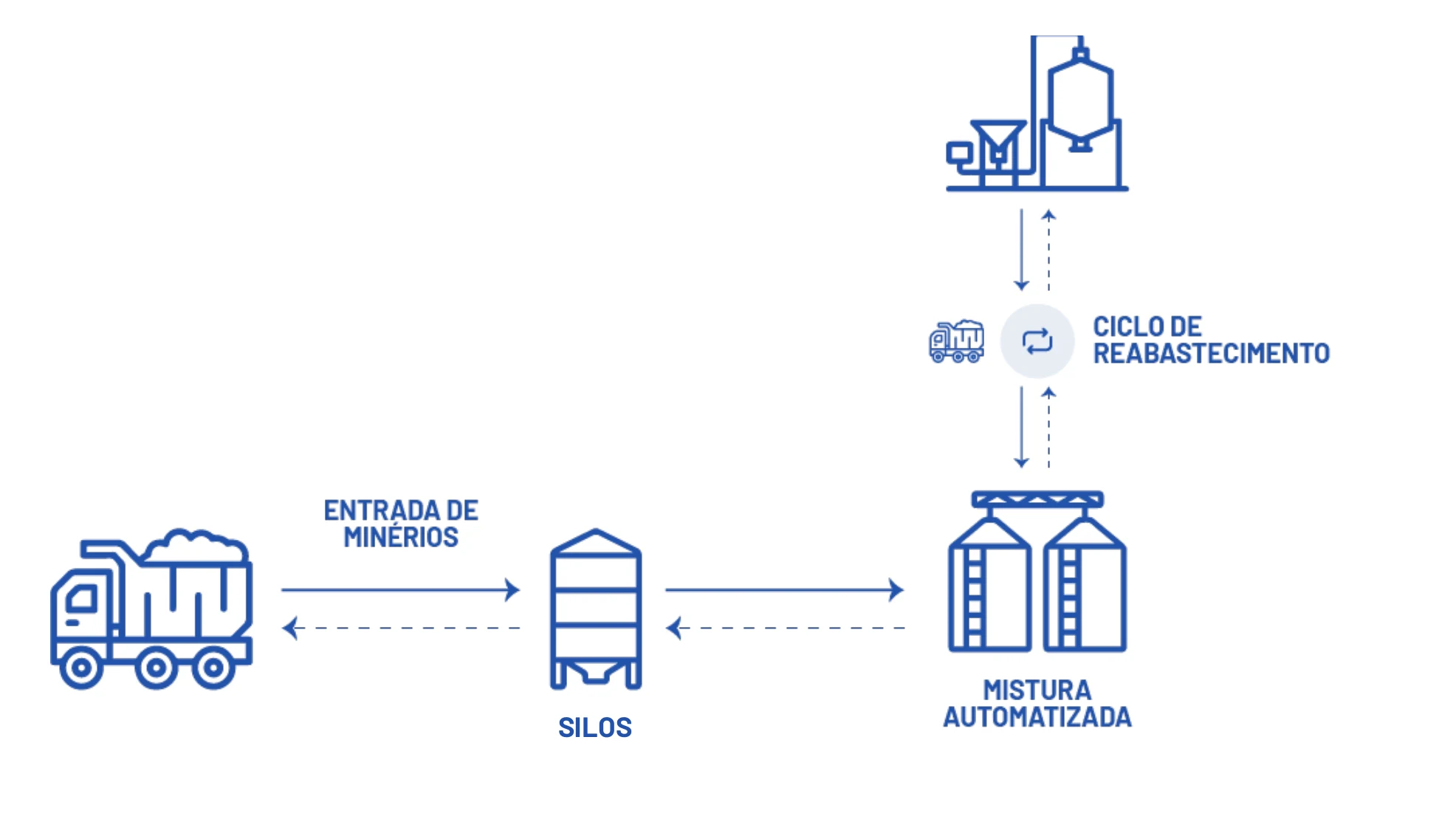
- Refilling in sequence. The refilling cycle has to be organized so that no silo runs empty and the changeover time is as short as possible.
The solution
With Enacom, the plant began sizing its silos on an analytical model of its own flow, in three steps:
Models the plant flow
material intake, allocation of each type to a silo according to its share in the blend, controlled output to production, and the refilling cycle.
Calculates the number and capacity of the silos
based on the inflow and outflow rates of each material.
Optimizes the scenarios
with a quickly implemented heuristic solution that speeds up the search without losing accuracy and allows adjusting the material types and their proportions in the blend.
Operating context
Results
In the scenario comparison, the optimized configuration indicated silo installation costs 15% lower and operating efficiency 20% higher, with shorter, simpler blending cycles and no empty silos during the process.
The model minimizes the total installation and operating cost of the silos while keeping the proportion of each material, which supports a stable-quality blend for production.
What changes for management
- Investment sized by the flow. The number and capacity of the silos start from the inflow and outflow rates of each material.
- Cost and continuity in the same decision. Installation and operating cost is minimized without leaving the blend unsupplied.
- A stable blend. The proportion of each material is kept, supporting the quality production requires.
- Recipe changes tested first. New materials or new proportions can be evaluated in the model before changing the plant.
This case is for you if
- You design, expand, or review a coal or ore blending plant.
- You need to define how many silos to install and with what capacity.
- Blend stability depends on refilling several silos in sequence.
We start from your flow: we gather the rates and proportions of each material, model the refilling cycle, and compare configurations before the investment. The results of this case reflect the conditions of the plant analyzed.
Want to size your blending plant before investing?
Notes on the results
- Installation costs and operating efficiency: variation of the optimized configuration relative to the reference configuration considered in the sizing study.
- The percentages result from the comparison of scenarios in the plant sizing.
- Horizon: blend planning for the next month (M+1).
Results of an Enacom project with a coal blending plant. Client name kept confidential.