
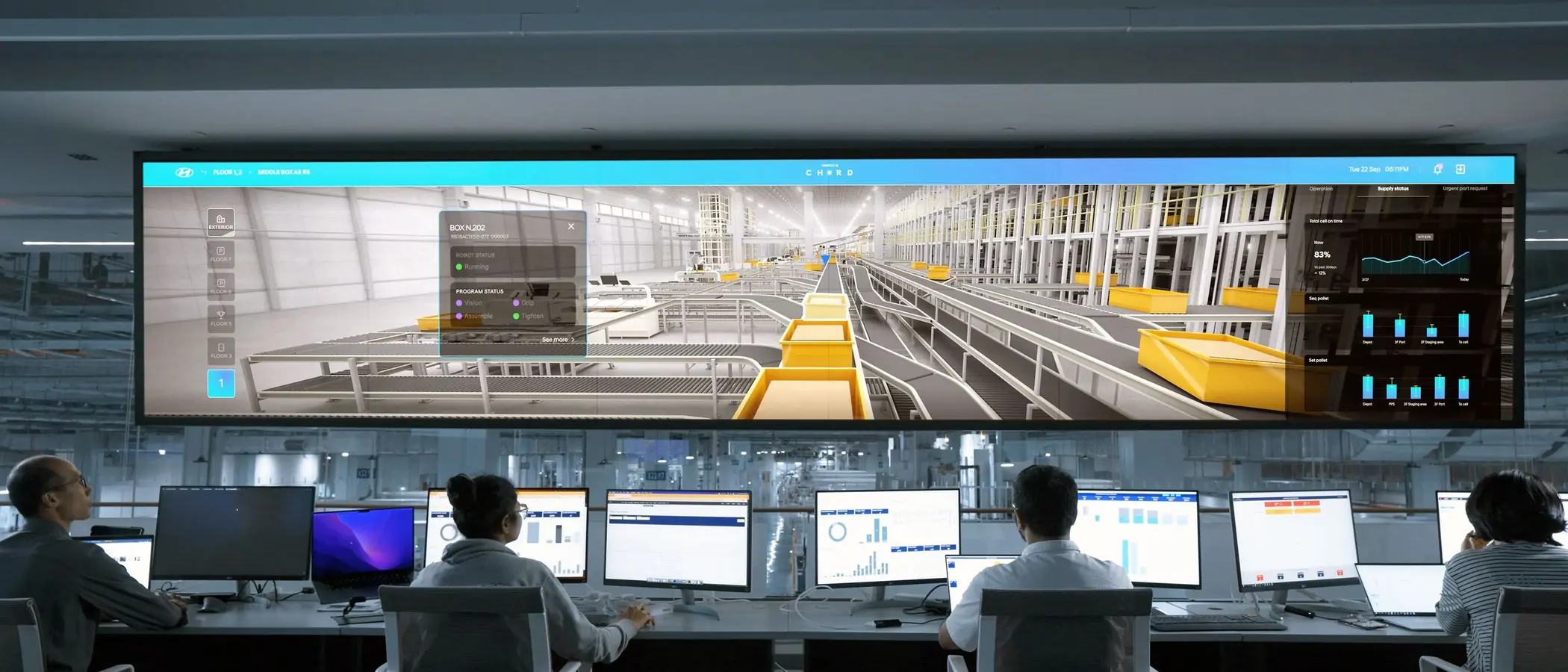
A Digital Twin is a digital copy of a product, process or piece of equipment that can improve manufacturing processes, reduce prototype costs and shorten a product's time to market.
Popular in Industry 4.0 because it makes it possible to evaluate how a prototype will work before it is even built physically, the technology is increasingly present in technology projects and can be useful for your company too.
Want to know more about the Digital Twin? Keep reading.
What is a Digital Twin?
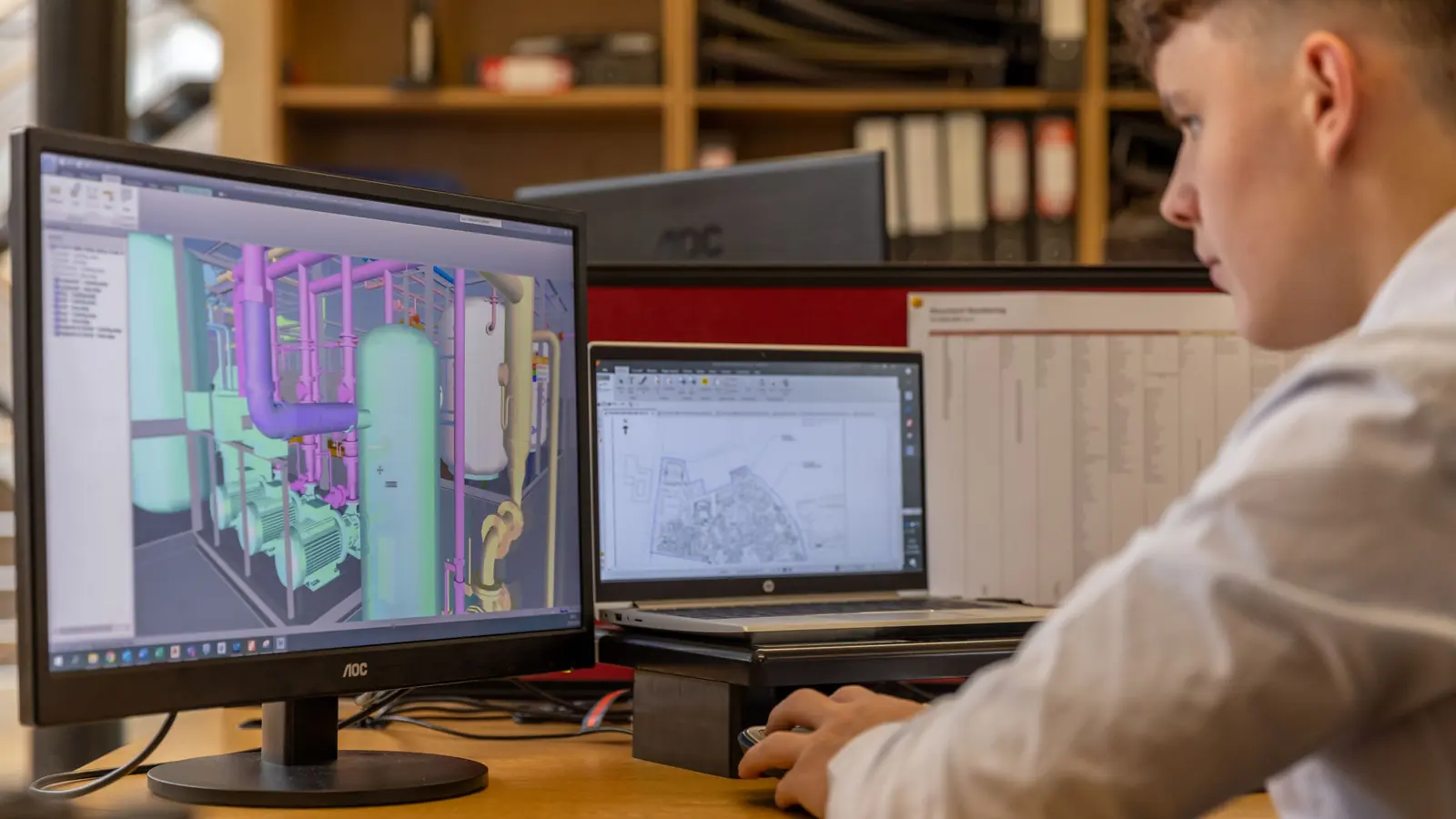
A Digital Twin is a virtual replica made in the image and likeness of a product, such as, for example, a multimodal operation, a steel shop, a hydropower plant, a port, etc.
Thus, the twin is a process that makes it possible to anticipate, control and optimize many operations, simulating the real in the virtual and evaluating the operation and status of assets and processes.
From there, real-time data is incorporated, which can be gathered through sensors or Big Data-related technologies.
Once collected, the information is processed with Artificial Intelligence, Cloud Computing, and Machine Learning to create a living representation that senses, thinks, and acts to optimize a process or product.
What is a Digital Twin for?
Once a twin is created, the copy starts operating within a simulated world, fed by countless data and algorithms that can show the most probable outcomes of how the reference object runs.
Simulations can predict performance, create different hypotheses, detect failures, design improvements, and generate deep insights into functionality, all much faster and at lower cost than physical testing would require.
In this way, the twin delivers more assertive decision-making, indicating to specialists the best course of action given the conditions set by the systems for hourly, weekly and monthly decisions.
The technology can be used for everything from designing small parts, such as screws, to creating factories, industrial processes, machines, rockets, or entire cities.
How does a Digital Twin work?
Initially, twins were just sophisticated 3D computer models, but Artificial Intelligence (AI) combined with the Internet of Things (IoT) and Big Data made it possible to build something digitally that learns constantly and helps improve the physical version of the item.
In practice, this robust technology relies on sensors that collect data on working conditions and physical actions on the reference object, and on how it reacts to certain stimuli.
A great deal of data is collected so that the parameters of the virtual twin to be created are faithful to the reality of the object.
The component is connected to a Cloud Computing-based system, and the data it generates is monitored by sensors at all times.
From there, contextual data and important feedback are transmitted to the observers on duty.
In addition, a lot is discovered about a process, object or system when the Digital Twin is analyzed by a broad front that includes specialists and cutting-edge technology acting simultaneously.
Learn about some advantages of the Digital Twin
One of the main advantages of digital twins is the ability to identify problems in advance and solve them more quickly.
They can warn about any future problem, incident, or anomaly in operation through direct interaction with humans, just like HAL 9000, the supercomputer in Stanley Kubrick and Arthur C. Clarke's film 2001: A Space Odyssey, who, through fiction, anticipated a symbolic protagonist of the 4th Industrial Revolution.
Twins can also work autonomously because they are able to analyze a situation, propose optimized solutions and put them into operation.
Moreover, when a company builds a digital replica of its products, the environments in which it operates, and the systems that produce them, it can virtually predict everything that will happen in the physical world.
For engineers, Digital Twins are very useful because, with a detailed history of the previous model, they can correct errors and create new, more reliable versions.
Digital Twin features in Industry 4.0
A twin's features can range from testing and validating projects at early stages, identifying and fixing problems and failures, and running training in simulated environments to monitoring and controlling operations in real time.
A Digital Twin can therefore be used in various sectors, such as Engineering, Industry, Logistics and Healthcare, among others.
Learn about Enacom's Digital Twin case applied to the Steel sector, which made it possible to increase production by one day without new infrastructure investments.
Check out possible uses of twins in Industry 4.0:
Process and Product Simulation
The Digital Twin can be used to create virtual simulations of industrial processes and finished products, making it possible to test different scenarios and identify possible problems before starting real production.
Predictive maintenance
By monitoring production data and machine behavior in real time, the Digital Twin can be used to predict the need for preventive maintenance, avoiding unexpected downtime and reducing costs.
Training and Skills Development
The Digital Twin can be used to train operators and technicians in virtual simulations of the machines and equipment used in industry, allowing them to develop essential skills and knowledge safely and efficiently.
Continuous Improvement
The Digital Twin can be used to evaluate production configurations and processes, identifying points for improvement and suggesting changes that can increase the efficiency and productivity of the production line.
Data Analysis and Decision-Making
By collecting and integrating data from different sources in industry, the Digital Twin can provide detailed analyses and reports to support strategic decision-making, enabling process optimization and greater company competitiveness.
Digital Twin in your company
Implementing a Digital Twin is not a process that can be completed overnight. Therefore, before incorporating a twin into your company, you need to meet the following challenges:
- Massively monitor and digitize industry processes that require a rigorous industrial integration and automation architecture
- Multiply the capacity of current data storage, management and analysis systems to handle the volume that digital twins require
- Make the leap from digital representations to managing multiple simultaneous digital copies, with greater capacity to evaluate alternative scenarios
- The Digital Twin is a worldwide technology trend that has been growing rapidly in recent years, and at Enacom it is no different.
Would you like to apply this tool in your company? Talk to our experts. We can help you!
Learn more: explore the Gemminus platform.