
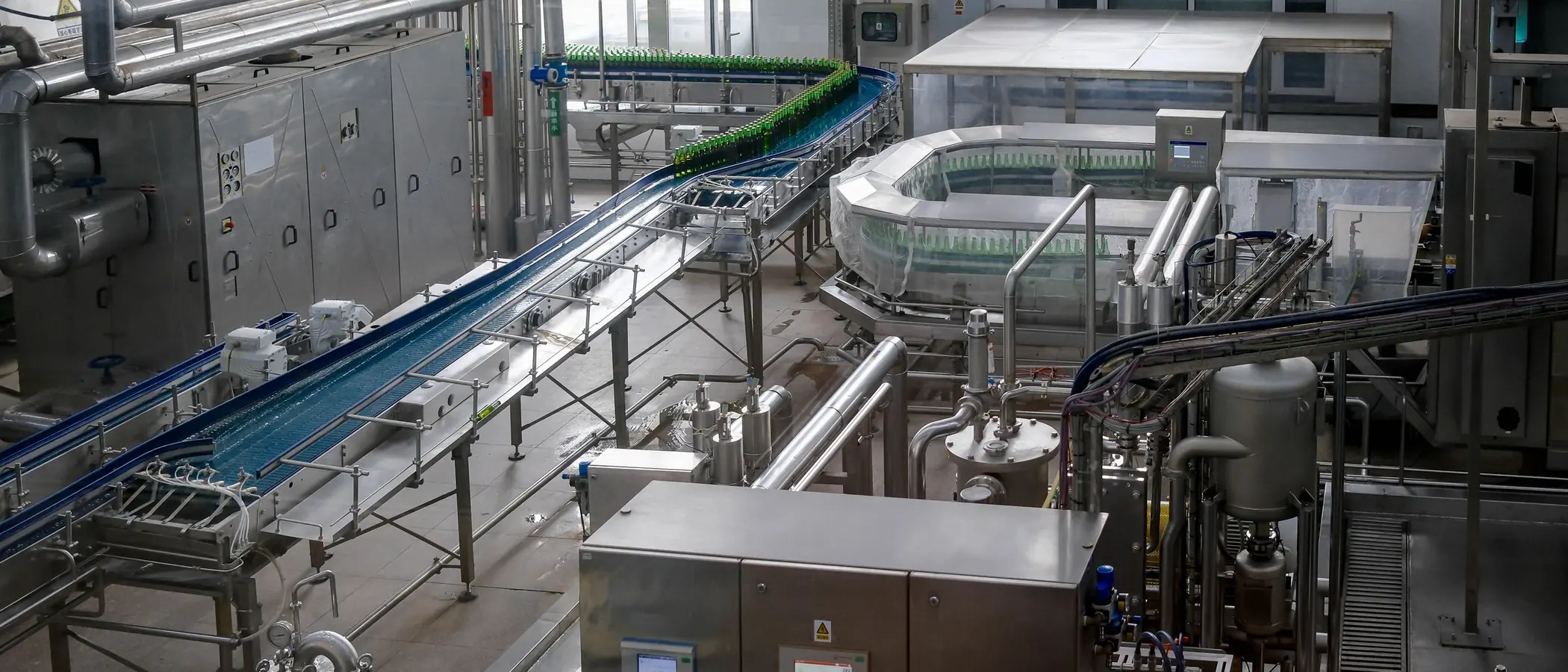
Some pillars of this innovation are characterized by the integration of cutting-edge technologies such as Artificial Intelligence, the Internet of Things (IoT), Big Data, Cloud Computing, and Machine Learning into industrial processes.
Want to learn more about Industry 4.0 and how to apply it in your company? Keep reading!
What is Industry 4.0?
Industry 4.0 is the accelerated digitalization and customization of manufacturing today.
Its approach to pursuing optimized results for industry was not possible until recently, but today it combines innovations and digital technologies capable of revolutionizing different sectors.
The 4.0 era introduces smart technologies and devices that automate a good part of operational and strategic processes, and from there it delivers intelligent production for industry.
Some of its premises are autonomous production and greater efficiency in production processes, which seek to increase the flexibility of production lines and shorten time to market.
This is possible thanks to the use of real-time data, which enables greater automation and product customization.
In practice, Industry 4.0 can be understood as a new production paradigm capable of increasing companies' competitive potential, reducing costs and driving customized production.
But why “Industry 4.0”?
Industry's processes and techniques have a history. They have evolved over time to improve their performance and output, contributing to the technological advances of their time.
For this reason, the industrial revolutions are divided into stages. They are:
- 1st – Steam engine (1700)
- 2nd – Electricity and mass production (1920)
- 3rd – Computing (1950)
- 4th – Industry 4.0 (2011 – present)
- Thus, Industry 4.0 can also be referred to as the 4th industrial revolution because it contains significant changes for industry, just like its predecessors.
The goal of this innovation is to transform the way companies develop, distribute, and market their products, generating new business opportunities and improving people's quality of life.
Characteristics of Industry 4.0
Its advantages and applications are present in a growing number of segments, significantly transforming the global market and bringing greater performance to processes. Its main characteristics are:
- More sophisticated production lines
- Active communication and more in-depth management
- Greater project performance
- Minimal errors and waste of inputs
- Work directly supported by market data and information
Advantages of Industry 4.0
- Lower environmental impact. the efficient use of natural resources, combined with automation and data consolidation, helps reduce waste and excessive consumption, making production more sustainable for the global economy.
- Higher quality. the integration of quality monitoring and control systems helps prevent production defects, bringing more reliability to products.
- More flexibility. Industry 4.0 makes it possible to respond to market changes more quickly, offering more customized production that adapts to customers' needs.
- Agile decision-making. thanks to real-time data collection, companies have access to more up-to-date and accurate information, which speeds up decision-making.
- Cost reduction. process automation and the use of cutting-edge technologies reduce production costs and make the company more competitive.
- Product customization. Industry 4.0 makes it possible to develop customized products at scale, meeting customers' specific demands.
Outlook for the tools of the 4.0 era
According to Totvs, a business management and systems blog, a Boston Consulting Group study presents 9 pillars of the fourth industrial revolution that bring new perspectives to industry. Here they are:
- Artificial intelligence. provides an ever-growing range of services and is becoming more autonomous, flexible, and cooperative, leading to higher-quality deliverables.
- Big Data. analyzing large volumes of data optimizes production quality, saves energy, and improves services, in addition to enabling real-time decision-making.
- Cybersecurity. connectivity and communication protocols are becoming the norm, and sophisticated identity and machine access management systems are being used to provide secure and reliable communications.
- Cloud Computing. operational processes in the 4.0 era require more data sharing across sites and companies. Because of this, the performance of cloud technologies tends to improve, reaching millisecond response times.
- Additive manufacturing. 3D printing technologies are being widely used for their high performance in producing small batches of customized products.
- Horizontal and vertical system integration. with the 4.0 movement, at some point every organization will be interconnected and companies will be connected to one another.
- Internet of Things. with this tool, a growing number of products will be smart and will connect using standard protocols. This will decentralize analysis and decision-making, enabling real-time responses.
- Augmented reality. this tool will give operators the information they need in real time so that decisions are made faster and work processes improve.
- Simulation. technologies such as the Digital Twin, used at Enacom, will leverage real-time data to mirror the physical world in a virtual model that will support project development.
Implementation
Industry 4.0 is becoming a global trend and shows that technology can bring numerous possibilities for improvements in production processes and real leaps in business competitiveness.
This is a necessary revolution that demands rapid adaptation from companies and the market, because for the 4.0 era to be fully implemented, a major transformation in the industrial sector is required.
The main demands to be met are the use of disruptive technologies and an organizational culture that is open to innovation and entrepreneurship.
It is worth noting that a good implementation of Industry 4.0 is an opportunity to reduce production costs, thereby increasing product quality and ensuring a good reception from consumers.
Industry 4.0 in Brazil
In Brazil, Industry 4.0 is still quite timid. However, the Brazilian Industrial Development Agency (ABDI) points out that if adopted across Brazil's production base, the 4.0 era could generate savings of billions per year for the country.
This is because artificial intelligence technologies help mainly with equipment maintenance and, as a result, repair cost reductions are estimated to reach R$ 35 billion per year. In addition, projected productive efficiency gains correspond to savings of R$ 31 billion, according to ABDI.
In addition, another benefit of Industry 4.0 is production with lower environmental impacts, since optimizing industrial processes can lead to reduced CO2 emissions. This would result in more sustainable, controlled production with less unnecessary spending for Brazilian industries.
How can your company prepare for Industry 4.0?
The outlook for the 4.0 era is very positive, but it is worth stressing that advances in industrial processes should be made gradually and strategically, starting from good planning based on what matters most to your company.
Below, we have prepared a step-by-step guide with some tips to help you understand how to apply Industry 4.0 to your business.
Understand the concept of Industry 4.0 and its benefits: the first step in preparing to implement this innovation is understanding what it means and how it can improve your business.
Identify what is needed to implement Industry 4.0: it is important to assess whether the company already has the technology infrastructure needed to implement this new way of producing.
- Invest in technology and innovation. when implementing Industry 4.0, you must be prepared to invest in technology and innovation, from new equipment and systems to employee training.
- Promote employee training. all employees who will work with the new equipment and systems must be properly trained to ensure successful implementation.
- Set clear goals and objectives. for the implementation of Industry 4.0 to be efficient, it is important to set clear goals and objectives, as well as to measure the results obtained.
- Adopt a culture of innovation and creativity. Industry 4.0 demands a culture of innovation and creativity within the company, encouraging the development of new products, processes, and services.
- Stay attentive to the market. to stand out in Industry 4.0, it is important to stay attentive to market trends and offer increasingly customized and innovative solutions.
- Implement gradually. it is important to create a gradual implementation plan for Industry 4.0, in order to minimize potential negative impacts and ensure a successful transition.
Enacom is a company that has operated in the market since 2009, closely following the technological evolution of Industry 4.0. Using cutting-edge technologies such as Artificial Intelligence, Machine Learning, and Big Data, among others, our team develops software that can drive the growth of your business.
Get in touch with our specialists and find out how we can help unlock your company's potential in the era of Industry 4.0.