
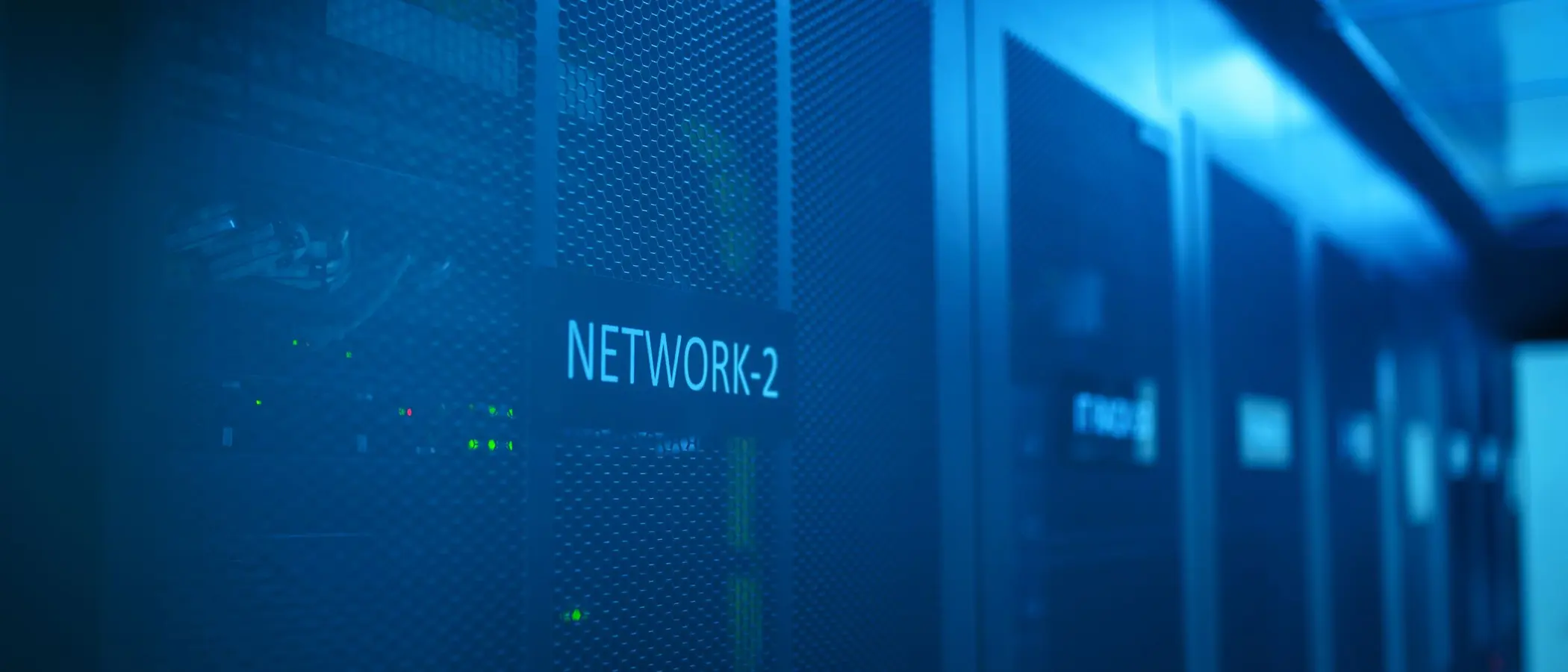
One of the technologies standing out in this new era is Edge Computing, which enables real-time data processing and analysis right where the data originates, bringing agility, security and resource savings.
Keep reading to learn more about the importance of Edge Computing in Industry 4.0 and how it is shaping the future of manufacturing.
Edge Computing and reduced latency: improving operational efficiency
Edge Computing is a data processing architecture that allows processing and analysis tasks to run directly on internet-connected devices, instead of sending that data to the cloud.
This decentralized model reduces latency and minimizes dependence on network connectivity, ensuring a fast and efficient response.
Edge computing works by capturing and processing information as close as possible to the data source, unlike traditional computing, where data travels to a centralized data center before being processed.
This approach gives the system as a whole more agility, less connection latency and expands operational possibilities.
How this operation is structured depends on many factors, and there is still a good deal to evolve and discover, but we can say that an edge system requires deploying dedicated servers, gateway devices and other equipment that reduce the time and distance needed for computing tasks.
In addition, this network relies on sensors, computing devices and machines that collect data and send it onward, feeding analytics and Machine Learning systems, for example.
Edge Computing and real-time decision-making in manufacturing
Edge computing matters for more than one or two aspects of an organization's structure. It is a technology with the potential to revolutionize the way businesses operate. Check out some of the benefits of the edge data center for industry:
Reduced latency
By processing data where it originates, Edge Computing eliminates the latency caused by transmitting data to the cloud. This is especially important in applications that require low latency, such as real-time quality control and predictive maintenance, supporting accurate and agile decision-making.
Improved security
By processing data locally, Edge Computing reduces data exposure to potential security breaches in the cloud. This is crucial, since Industry 4.0 involves large volumes of sensitive data, such as production information and intellectual property.
Operational efficiency
Edge Computing makes it possible to run machine learning and artificial intelligence algorithms directly on devices, speeding up decision-making and improving operational efficiency. With this capability, it is possible to optimize processes, improve product quality and reduce maintenance and energy costs.
Lower bandwidth dependence
In industrial environments, the availability of a stable internet connection can be a challenge. Edge Computing minimizes the dependence on significant bandwidth, bringing flexibility and ensuring operational continuity even under unstable connectivity conditions.
Data security and privacy in Industrial Edge Computing
Edge computing has the capacity to unlock new standards of data privacy and security, as well as system responsiveness and reliability.
In addition, the risk of data leakage is minimized, since data is stored locally, according to processing capacity.
Following this logic, organizations gain greater control over information disclosure and align with regulatory policies.
However, implementing this technology can be seen as a risk and a challenge, since its use expands a company's digital surface, thereby increasing the risk of cyberattacks.
Therefore, an information security strategy should include a series of assertive actions that address efforts to stop cyberattacks when planning for the use of edge computing.
Edge Computing and Cloud Computing in Industry 4.0
Although related, the concepts of edge and cloud computing differ.
While cloud computing aims to concentrate services in a few data centers, making it possible to scale and share resources more efficiently, edge computing seamlessly moves its intelligent operations to “the edges” of the cloud, in whatever way the workflow requires at the moment.
This means decisions can be made closer to sensors and IoT devices, such as visual analytics near a production line that can monitor operational quality, saving a great deal of time and resources by avoiding the need to send large amounts of data to the cloud for processing.
In short, the similarities between the two data storage and processing systems diminish when we understand edge as a more elaborate evolution of cloud computing, whose performance is dedicated exclusively to industry and its specific needs.
With its ability to deliver reduced latency, improved security, operational efficiency and lower bandwidth dependence, Edge Computing is shaping the future of manufacturing.
Whether in real-time quality control, predictive maintenance or the use of immersive technologies, the technology proves fundamental to boosting the productivity and efficiency of Industry 4.0 plants.
Enacom has been driving business through our solutions since 2009. Innovative technologies such as Edge Computing bring greater agility, security and resource savings to industrial processes, putting into practice what we develop here.
Talk to Enacom's team of experts and unlock your company's potential with the disruptive technologies of Industry 4.0.