
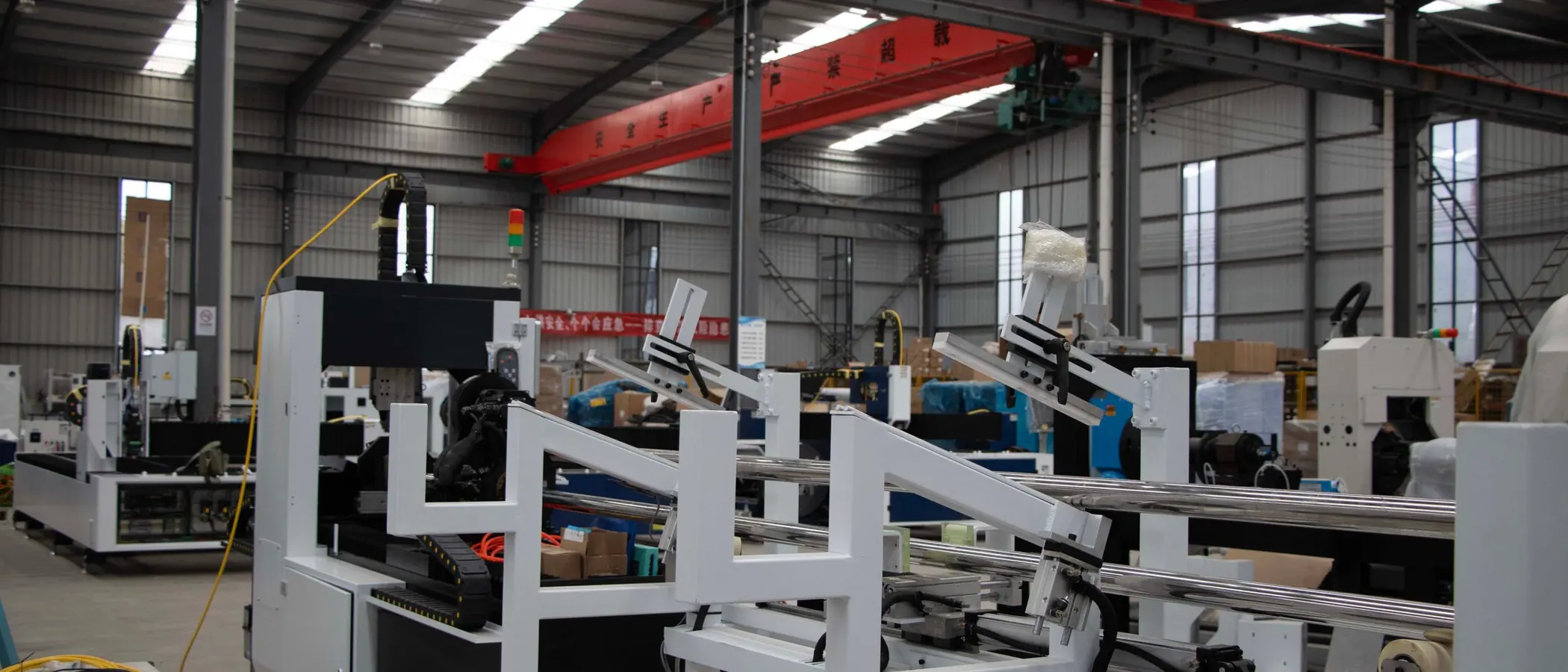
The so-called Fourth Industrial Revolution brought automation and the integration of technologies, such as robotics, into the industrial sector, and aims to promote the digitalization of processes and activities to increase productivity. But how did we get here? Keep reading to learn more about the world of Industry 4.0.
The historical evolution of Industry 4.0
The First Industrial Revolution took place in 1780, when old manual looms were replaced by mechanized looms.
The second stage, which occurred in 1870, resulted in the creation of electric motors and the use of petroleum-derived fuels.
Then, in 1970, the advance of technology, computers, and robotics began, leading to the Fourth Industrial Revolution, with the combination of digital technologies integrated into large industrial machinery.
The term Industry 4.0 was first used in 2011, in Germany, at the Hannover Fair. The following year, project developers produced a report on technological innovations for industry, and in 2013, at the same fair, the final version of the study on Industry 4.0 was released.
The 4.0 Revolution made it possible to create smart, automated industries with the autonomy and precision to avoid or predict failures, schedule maintenance, and carry out adjustment procedures.
Its differences from traditional industry can be seen in the decentralization of processes, with systems that can make real-time decisions about production needs; in modular versatility, which ensures more flexibility and the ability to adapt machines to demand needs; and in the virtualization of systems, in which the entire factory can be monitored and controlled remotely through sensors.
The key technologies that made Industry 4.0 a reality
The Industry 4.0 Revolution is not necessarily tied to high investments and complex tools. This is because even small industries can implement technology solutions in their business and optimize their results.
The impacts of Industry 4.0 technologies are visible in every sector, and many companies are entering this world to ensure their market competitiveness. Learn about some of these technologies and how they can contribute positively to your business:
Artificial intelligence
The application of advanced analytics and logic-based techniques, including machine learning, to interpret events, analyze system trends and behaviors, support and automate decisions, and carry out actions.
Cloud computing
It is the delivery of computing services – servers, storage, databases, networking, software, analytics, intelligence – over the Internet, using the memory, storage capacity, and computing power of computers and servers hosted in data centers, providing flexible resources and economies of scale.
Cloud computing allows companies to access abundant computing resources as a service and from different remote devices. This avoids high investments in equipment and support staff, allowing companies to focus their investments on their core activities.
Big data
It is an approach for working with data of greater variety and complexity, arriving in increasing volumes and at ever-greater velocity, used to solve business problems.
These data sets are so voluminous that traditional data processing software cannot manage them. For this reason, statistical and machine learning techniques are used to extract business-relevant information, inferences, and trends that cannot be obtained through human analysis.
Advanced robotics
Devices that act largely autonomously, that interact physically with people or their environment, and that are able to modify their behavior based on sensor data.
Systems integration
The union of different computing systems and software applications to act as a coordinated whole that enables the exchange of information among the different systems, giving companies a comprehensive view of their business.
Real-time information about the production process influences managerial decision-making more quickly, and the company's strategic business decisions can be more easily implemented on the production floor.
Simulation systems
The use of computers and a set of techniques to generate digital models that describe or display the complex interaction among multiple variables within a system, imitating real-world processes.
Successful case studies in implementing Industry 4.0
The new generation of industry also requires adaptations in the traditional production relationship among suppliers, producers, and customers, as well as in the interaction between humans and machines.
This change improves industry efficiency, but it can become a challenge if not executed correctly.
Finding the right technologies for your company, training employees on the new equipment, and being prepared for new market demand are fundamental steps to success in the era of Industry 4.0. Check out some aspects that contribute to the successful implementation of Industry 4.0:
Cloud computing
Since it does not require much in-house equipment, it brings many sustainability benefits to small companies, such as savings in energy, space, and infrastructure, among others.
Traceability
With the use of digital devices to manage the product life cycle and product movement, applying Industry 4.0 results in greater traceability efficiency, better control of functionality, and the streamlining of corporate production management.
Internet of Things (IoT)
It enables increased operational efficiency through the introduction of automation techniques and more flexible production, allowing manufacturers to increase productivity by up to 30%.
The challenges and obstacles overcome in adopting Industry 4.0
The development of the 4.0 company in Brazil involves challenges ranging from investments in equipment that incorporates these technologies, to adapting layouts, adapting processes and the ways companies relate to one another along the production chain, creating new specialties, and developing skills, among others.
The cross-referencing of information that makes it possible to connect the purchase order, production, and distribution autonomously, without people needing to make decisions at every moment, for example, will require new forms of management and engineering across the entire production chain.
Few companies will be prepared to face all these changes at once, but there are, on the other hand, thousands of companies that will take part in the diffusion of these new technologies gradually, according to their trajectories, their capabilities, and their strategies.
In this context, what tends to happen during the development of Industry 4.0 in Brazil is that some companies will enter the new paradigm and will, sooner or later, push others to speed up their entry into this world, at the risk of not surviving in the new competitive environment.
Boost your business with Enacom
Enacom has operated in the market since 2009, developing solutions with key Industry 4.0 technologies, such as Artificial Intelligence and Big Data, for the most diverse industrial problems.
Talk to our specialists and invest in assertive competitiveness for your company.