
The telecommunications “internet”
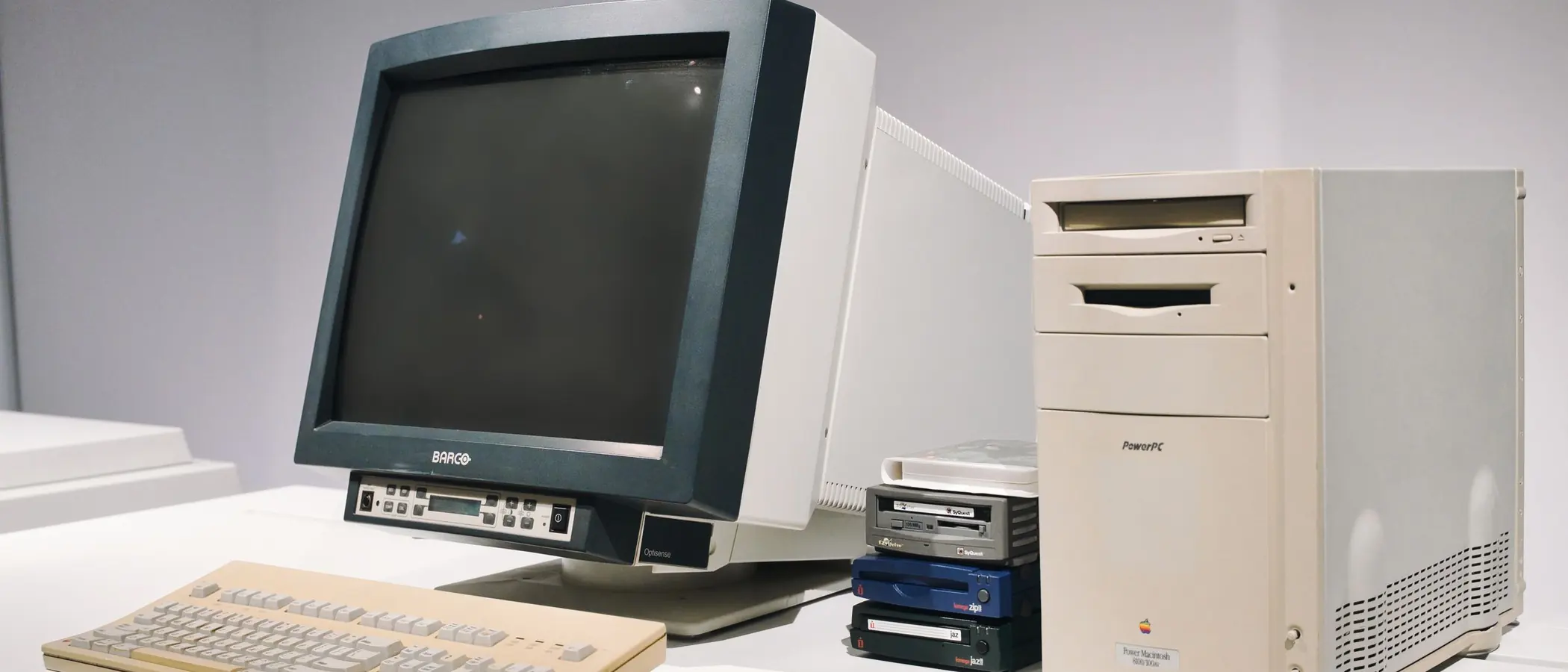
The internet, more or less as we know it today, reached Brazil in 1995. It was accessed from a desktop computer over the home phone line, already with “www” domains. However, more than 10 years earlier, some Brazilians were able to experience what would become the ancestor of the internet, and which is little known today: videotex.
Embratel and Project Ciranda
The first ideas for this innovative technology began to be developed in the late 1970s inside Embratel (Empresa Brasileira de Telecomunicações S.A.), with Project Ciranda, which aimed to be a kind of virtual community bringing all Brazilians together, almost like today’s social networks.
However, you needed a computer to access Ciranda, and it was very hard to buy a computer in 1980s Brazil — remember that at the time the country was living under a civil-military dictatorship and many imports were prohibited.
In addition, the service’s monthly fee cost the equivalent of R$ 69, and all the content depended on Embratel itself, which was unable to keep it up to date.
As a result, Ciranda reached just over 2,000 subscribers in Brazil before being canceled a few years later.
Around that time, Europe was experimenting with another connection format: teletext, which used television and the telephone signal to transmit information.
Le Grand Minitel!
In France, Minitel was launched in 1982 and became a success. The French bought — or were given by the government — small devices with a black-and-white screen and a keyboard. With them, they could access the day’s news, stock exchange prices, weather forecasts, banking services, and even shop.
In 1989 there was even a French film called 3614 Code Père Noël (3614 Santa Claus Code) in which a boy, trying to talk to Santa Claus through Minitel, gives his address to a criminal posing as the old man and ends up having to defend his home.
Have you seen something similar before, maybe on Globo’s afternoon movie slots around Christmas? That is because a year later, Home Alone would do something very similar. So much so that the director tried to sue those responsible for plagiarism.
Minitel was so popular in France that it even got in the way of the internet’s arrival there. In the late 1990s, half of the people used Minitel, while the World Wide Web reached only 20% of homes. The success was such that the services were only discontinued in 2012.
Fun fact:
In other European countries that used similar solutions, it is still possible to read the news “online” on television — Portugal, Hungary, and Italy still have some teletext services, maintained by television networks.
Minitel in Brazil
Videotex, as it was called (or VDT to those in the know), was based on the successful French technology and debuted in Brazil in the early 1980s through Telesp (Telecomunicações de São Paulo), the telephone operator of the Telebrás system in São Paulo, but it spread across the whole country.
To use Videotex, you had to buy a Telesp kit containing a modem, which connected your TV to the “network,” and a keyboard. Telesp employees came to customers’ homes to do the installation and, after that, you could access the information.
However, although television was already relatively popular in Brazil, a telephone line was far less accessible. In those days it was easier for citizens to own cars than telephones at home. That is why there were so many public phones on the streets, the so-called “orelhões” (public payphone booths).
Fun fact:
At the time, Telesp even tried to do something similar to Videotex by installing terminals in public places in São Paulo, which ended up being known as “olhões” and were meant for use by the general population, which today sounds super retro-futuristic!
Videotex: Brazil’s pre-internet
It was through the telephone and television link to a central computer with a small alphanumeric keyboard that Videotex gave its users the first big in-person meetups in Brazil of people who had met anonymously online, in the mid-1980s, and which ended up becoming huge monthly parties in São Paulo that lasted for 8 years!
Chats on videotex
In 1993, Videopapo, an anonymous chat, was Videotex’s most popular service, with more than 50,000 users. And just like the leaks on today’s streaming services and networks, back then about 33,000 people pirated the service to avoid paying the monthly fee of about R$ 40.
Blind dates and anonymous meetups arranged through videotex were common – which protected people who had difficulty meeting others like themselves in the physical world, such as LGBT people.
Keep in mind that, because of the dictatorship, videotex was also censored whenever messages left it for the media or whenever there was any popular movement against the prevailing system.
News, business, and entertainment on videotex
Newspapers such as Estadão and Correio, which envisioned a paperless future, were the first to join Videotex, offering news and services.
* Watch the 1984 TV Curitiba report on the arrival of the system through Telepar (Telecomunicações do Paraná S.A.)
Companies such as Globo and Pão de Açúcar made internal use of Videotex to make it easier to contact service providers and suppliers.
Several companies made online sales through Videotex, including Editora Abril and Livraria Nobel. It was also possible to book hotels and airline tickets.
Banks, which are always investing in new technologies, made extensive use of Videotex to offer access to bank statements and investments. Bradesco, in 1983, was already offering home banking services via Videotex.
Some TV shows even interacted with the audience through Videotex, as was the case with the show “Qual é o Grilo,” on TV Cultura, in 1983.
The end of Videotex in Brazil
In 1983, just over a thousand customers were using Telesp’s service in São Paulo. In May 1986, just over 30,000 subscribers had access to Videotex, which was beginning to be offered in other Brazilian states.
However, there were too few people to generate profit for the companies that tried to offer a variety of services such as newspapers, chat, banking, and shopping on the platform. Of the 90 companies offering services on the platform, only 6 were profitable.
Soon, the system entered a vicious cycle: people did not use Videotex because of the lack of services, and companies did not invest because of the lack of users.
A forgotten pioneering technology
In the late 1980s, when Videotex had still not been a success in Brazil, the Internet was taking its first steps in the United States, with networks between universities.
There, private companies also began offering private computer networks that connected a few hundred or thousand users.
In Brazil, the World Wide Web arrived in 1995 and became popular over the following decade. Meanwhile, Videotex was officially discontinued in 2003 by Telefônica, the company that bought Telesp, after 20 years of operation, with just a small footnote in a newspaper.
Nowadays it is even hard to find information about what Videotex was and how it worked. But the truth is that it was an innovative and, in a way, popular technology, since Brazilians had access to digital services before other developed countries.
Just imagine a Latin American country where, in 1983, people could access their bank accounts from home, shop in virtual stores, and meet people at a distance, all through Videotex, this ancestor of the internet in Brazil that few even remember.
So, did you enjoy learning about Videotex, the retro-futuristic technology that existed in Brazil in the 1980s? Follow the culture section of the Enacom Blog and stay on top of our intellectual discussions and historical rediscoveries surrounding Industry 4.0.