
Emerging AI Trends in Manufacturing
When the Third Industrial Revolution emerged in the 1960s, introducing automation, robotics, and information technologies, we could hardly imagine where information technologies would take us.
Today, in the Fourth Industrial Revolution, artificial intelligence is already integrated into many areas of society, especially industry, where it plays crucial roles such as predictive maintenance, production optimization, inventory management, product quality, and safety.
In the future, AI in Industry 4.0 will be even more prominent, allowing companies to automate more complex processes and make more accurate decisions.
Technologies such as Machine Learning have brought significant benefits to industry, including cost reduction, higher output, and improved processes based on statistics generated by Big Data.
The new industrial automation landscape brings innovative solutions and systems, such as IoT (Internet of Things), Big Data, Cloud Computing, and several other Industry 4.0 enabling technologies.
From a business standpoint, Artificial Intelligence (AI) and the Internet of Things (IoT), both fundamental to Industry 4.0, are joining forces and promise to take the industrial sector into the future of automation.
AIoT (Artificial Intelligence of Things) stands out as a more proactive architecture, promising to take industrial automation to a new level, with tangible innovations and technologies.
With the growing availability of accessible AI solutions, industry is already considering a variety of applications to improve its operations.
The advantages of adopting Artificial Intelligence in the industrial ecosystem are vast, from fault detection to automatic process correction, resulting in fewer failures and greater production scale.
AI and Demand Forecasting for Production Optimization
Demand forecasting in companies involves understanding and quantifying market needs, estimating future demand, and anticipating the need for products or services.
AI-based production optimization uses machine learning algorithms to plan and control production, allowing industry to adapt quickly to change and meet future demand.
Inadequate demand forecasting can result in overproduction or product shortages in the market, hurting sales and the ability to anticipate customer needs.
However, AI in production optimization improves demand forecasting, avoiding these risks. In a complex and volatile business environment, good demand forecasting is essential, as it influences processes such as logistics, financial planning, and manufacturing.
AI-based demand forecasting offers benefits such as lower inventories, better information management, improved service levels, smaller forecast errors, fewer stockouts, agility, and better sales forecasting.
AI and Predictive Maintenance: Reducing Unplanned Downtime
Predictive maintenance uses machine learning algorithms to analyze sensor data and predict failures before they occur.
This allows maintenance teams to plan and carry out tasks in advance, avoiding unplanned stoppages and improving machine availability.
AI in predictive maintenance is cost-effective and efficient, reducing maintenance costs, increasing asset availability, improving product quality, and extending asset life cycles.
It also reduces unplanned downtime, saving costs and improving operational efficiency.
AI and Intelligent Automation: Transforming Production Processes
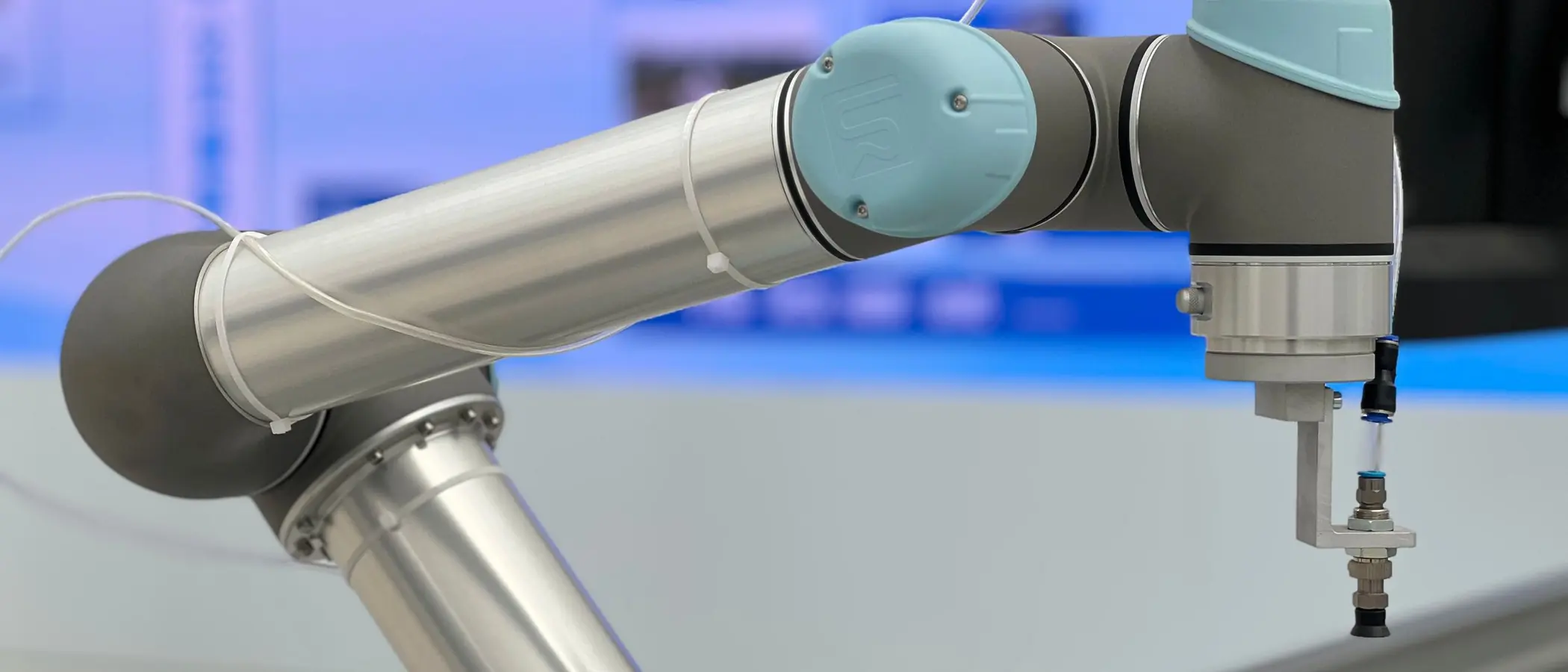
AI is driving intelligent automation in industry, allowing machines to perform tasks previously done by humans with greater precision and efficiency. Collaborative robots are becoming common on production lines, working alongside human operators.
AI algorithms enable these robots to learn, adapt, and make decisions in real time, resulting in more agile and productive processes.
The benefits include improved efficiency, lower operating costs, better product quality, flexibility and customization in production, as well as data analysis for informed decision-making.
Intelligent automation is revolutionizing industry by optimizing processes, improving quality, reducing costs, and enabling greater flexibility. This technology brings benefits such as higher productivity, greater competitiveness, and customer satisfaction.
Throughout Enacom's journey since 2009, the future has always been present in our solutions, and Industry 4.0 increasingly provides tools for our innovative projects. AI in industry still has a long way to go, and it is up to you to decide how you will compete in the market by using it to your advantage.
Talk to our experts and learn how to invest in enablers for your business.
Learn more: explore the Performance Digital Twin.